Marketing Tours
Posted on Aug 14, 2026 5 min read

Posted on Aug 14, 2026 5 min read
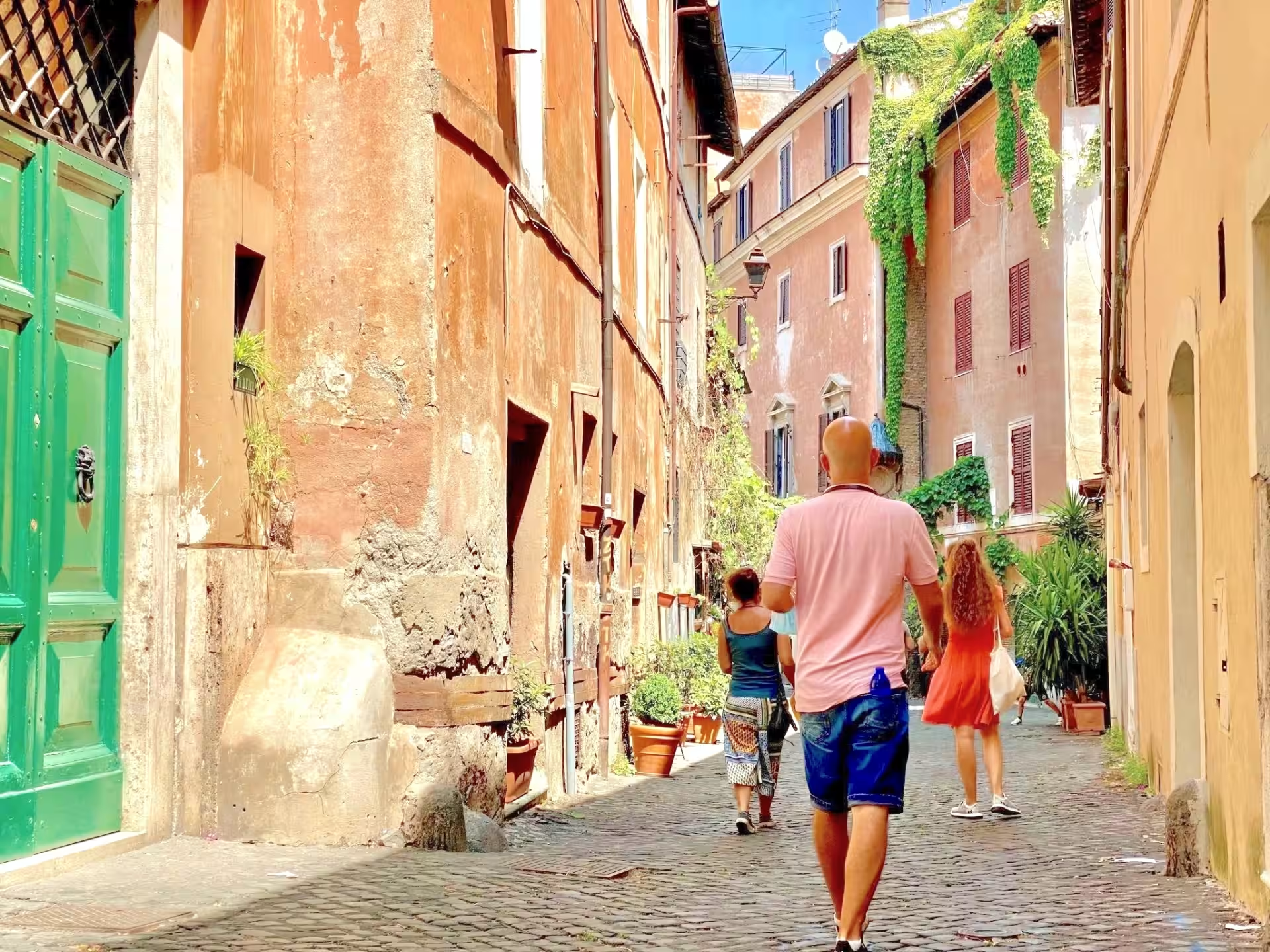
Rome is one of Europe’s largest capitals, yet it’s surprisingly walkable. Many of its most famous landmarks are only a short stroll apart, making it easy to explore much of the historic centre on foot.
Walking between Rome's landmarks often turns into sightseeing in its own right.
Leave the Pantheon for Piazza Navona and you'll pass beautiful churches, lively little piazzas, fountains, hidden courtyards, and cafés spilling onto the street. Before you know it, you've stopped three times for things that weren't even on your itinerary.
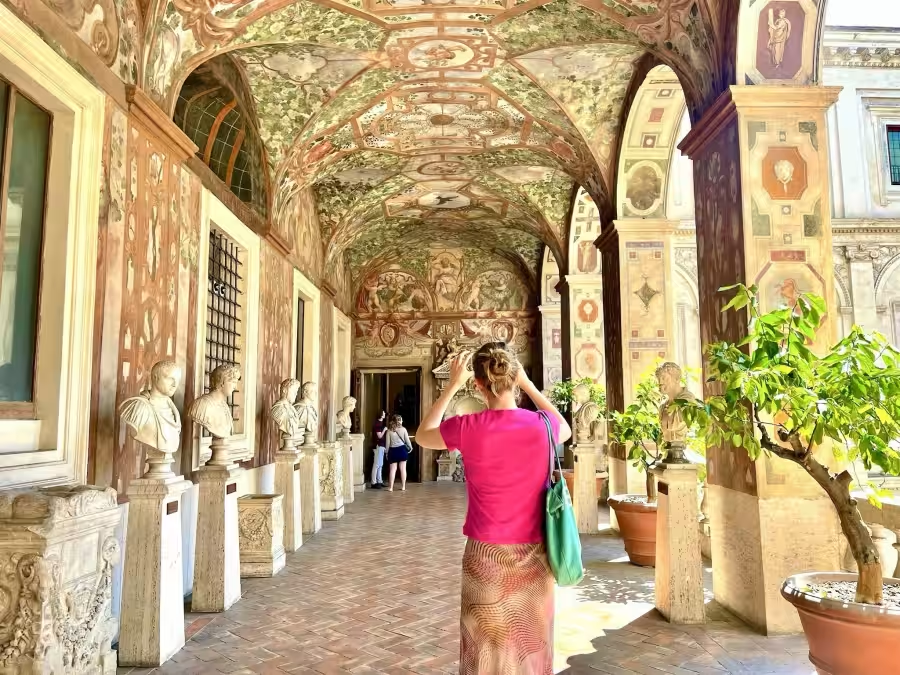
That’s one of the most rewarding things about exploring Rome on foot. You don’t just see the monuments you came for; you experience the city around them. You get to slow down, soak it all in, and enjoy everything between the landmarks instead of simply ticking sights off a list.
Some parts of Rome are particularly easy to explore on foot.
The historic centre is where walking really shines. The Pantheon, Piazza Navona, Campo de’ Fiori, Trevi Fountain, and the Spanish Steps all sit within comfortable walking distance of one another. From the Pantheon to Piazza Navona takes only around five minutes, while the Trevi Fountain to the Spanish Steps is about ten.
The ancient heart of Rome works much the same way. Piazza Venezia, the Capitoline Hill, the Roman Forum, Palatine Hill, and the Colosseum naturally flow into one another, making it easy to explore this part of the city on foot.
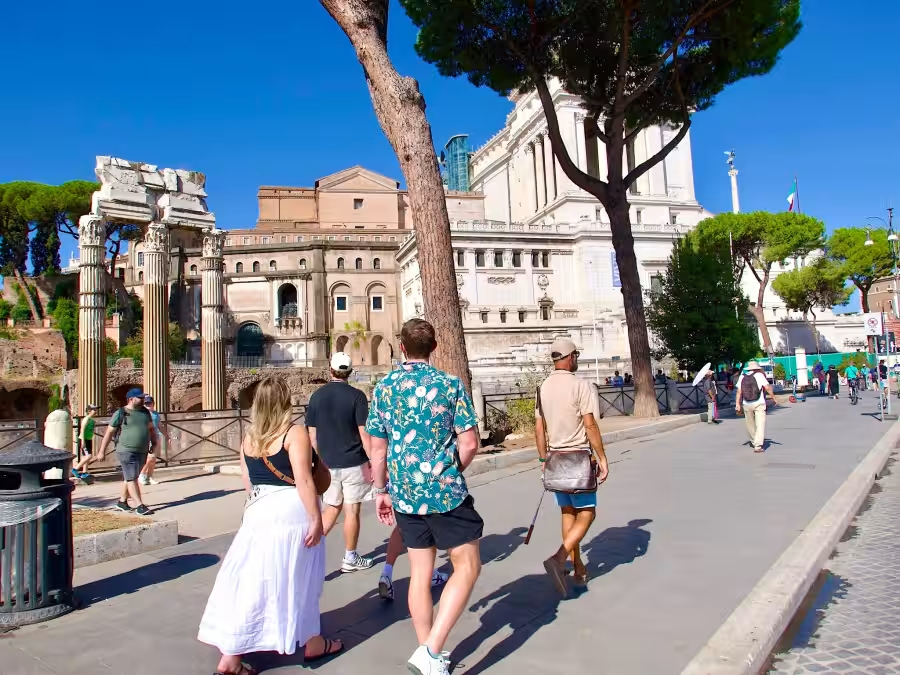
Around the Vatican, it’s just as easy to spend several hours exploring on foot. Walk between the Vatican Museums, St. Peter’s Basilica, and Castel Sant’Angelo, wander through the streets of the Borgo, then continue along the Tiber. Once you’re here, there’s plenty to discover without constantly jumping back on the metro or bus.
There is one small catch. Rome is a huge city, and some of its best sights are much further apart than they appear on a map.
Walking from the Colosseum to the Vatican Museums takes around 50 to 60 minutes, covering a little more than 4 kilometres. Villa Borghese and Trastevere are another substantial walk, while places like the Appian Way and its catacombs are best reached by public transport.
Of course, you can walk these distances. But trying to cross half of Rome on foot in a single day - especially in summer heat - isn’t exactly the most relaxing way to see the city.
The trick is not to think of Rome as one giant walking route. Think of it as a collection of neighbourhoods, each with its own sights, streets, and surprises, rather than constantly zigzagging from one side of the city to another.
Here’s something you might not realise until you’re halfway through your trip: you probably already ended up walking a lot more than you expected.
The Roman Forum alone covers a huge area, while the Vatican Museums seem to go on forever. Add the strolls between sights, a museum or two, the occasional wrong turn, and finishing the day with 15,000 to 20,000 steps suddenly doesn’t sound so unrealistic anymore.
By the end of the day, your feet might be wondering why you decided to visit Rome in the first place.
That’s why comfortable shoes make such a difference. Rome’s famous cobblestones are beautiful, but they can be unforgiving after a full day of sightseeing. They’re also much slipperier after rain than they look.
Then there are Rome’s seven hills. Don’t expect every route to be completely flat, because some of those seemingly innocent walks can involve a surprisingly steep climb. Add summer temperatures above 35°C, crowded streets around the major sights, and an already long sightseeing day can feel even longer.
The biggest mistake is simply trying to do too much. The Colosseum, Vatican, historic centre, and Trastevere might all look manageable on a map. Try to squeeze them all into the same day, however, and you’ll spend more time crossing the city than actually enjoying it.
Walking doesn’t mean you have to walk everywhere. The easiest way is to use public transport between neighbourhoods, then continue on foot.
Take the metro or a bus to the part of the city you want to visit, then spend the rest of the day discovering it on foot. The metro is ideal for longer distances, like travelling between the Vatican and the Colosseum, while buses are useful for places the metro doesn’t reach, such as the Appian Way, the catacombs, or some of Rome’s further-flung neighbourhoods.
Inside the historic centre, though, public transport isn’t always the shortcut you might think it is. Buses get stuck in traffic, stops are close together, and waiting for one can easily take longer than simply walking. By the time the bus finally arrives, you could already be sipping a coffee in the next piazza.
Walking isn’t just one of the best ways to experience Rome - it’s better for the city too.
You’re not adding to the traffic, and you’re much more likely to discover the Rome that lies between the big sights. Instead of rushing from one sight to the next, you can wander into a church you hadn’t planned to visit, stop at a family-run café, browse a local market, or discover a little museum you never knew existed.
It’s better for you, and a little kinder to Rome too.