Marketing Tours
Posted on Jul 06, 2026 4 min read

Posted on Jul 06, 2026 4 min read
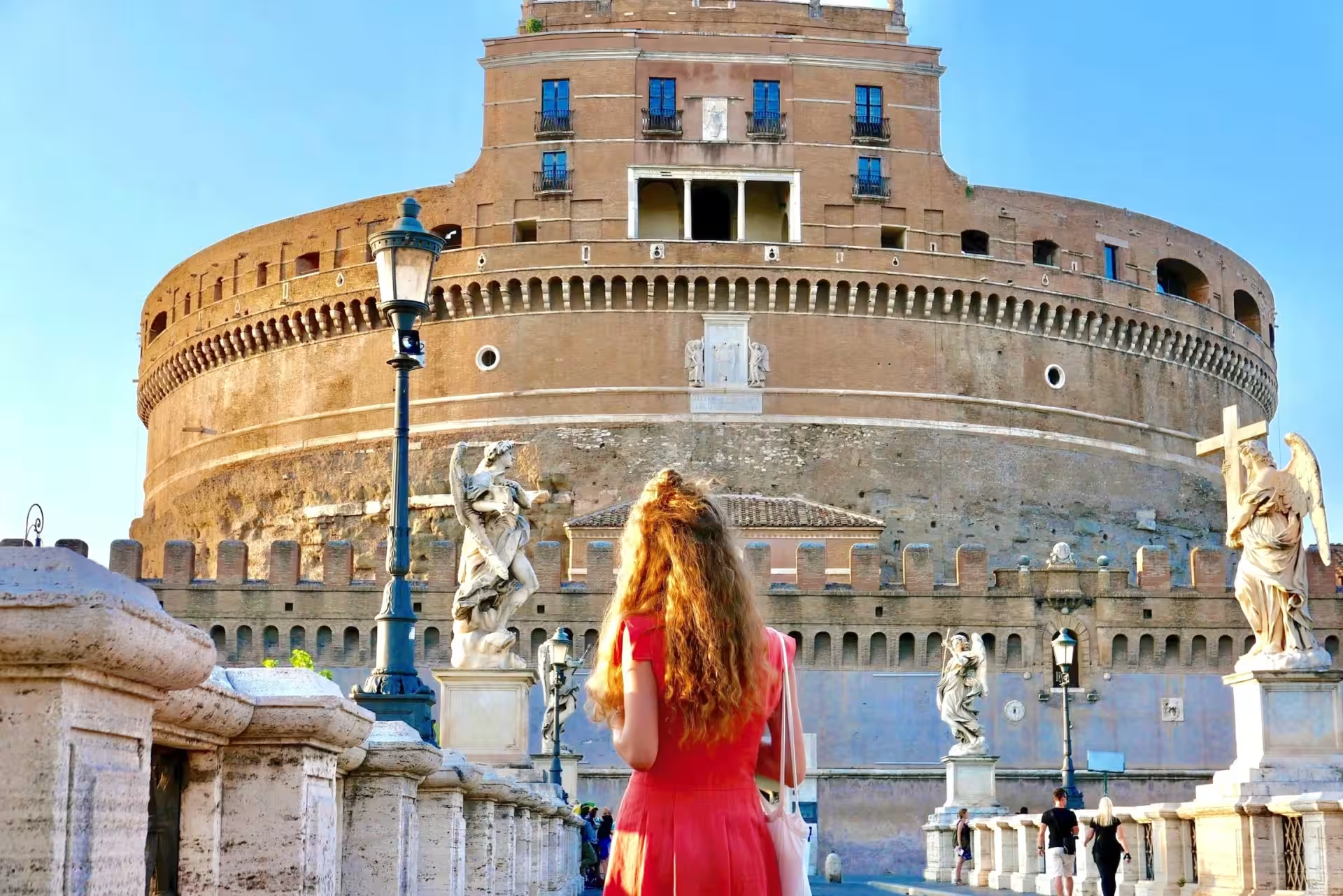
At first glance, Castel Sant’Angelo looks every bit like a medieval fortress. But appearances can be deceptive: the castle began life not as a fortress, but as the monumental tomb of Emperor Hadrian.
Over the centuries, it became a fortress, a papal residence, a prison, military barracks, and eventually a museum. Few buildings in Rome have been reinvented so many times, and that’s exactly what makes Castel Sant’Angelo such a fascinating place to explore today.
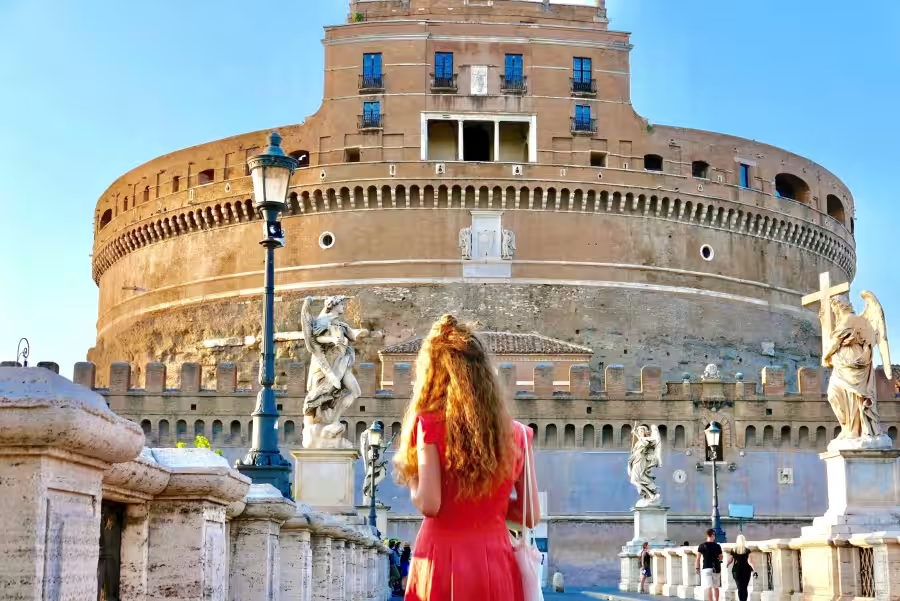
The story begins in the 2nd century AD, when Emperor Hadrian commissioned an enormous mausoleum for himself and his family.
This wasn't simply another Roman tomb. It was one of the largest and most ambitious funerary monuments ever built in the city. After Hadrian’s death, his ashes were placed here alongside those of his wife Sabina. Later emperors, including Caracalla, would also be buried within its walls, turning the mausoleum into the final resting place of Rome’s imperial dynasty.
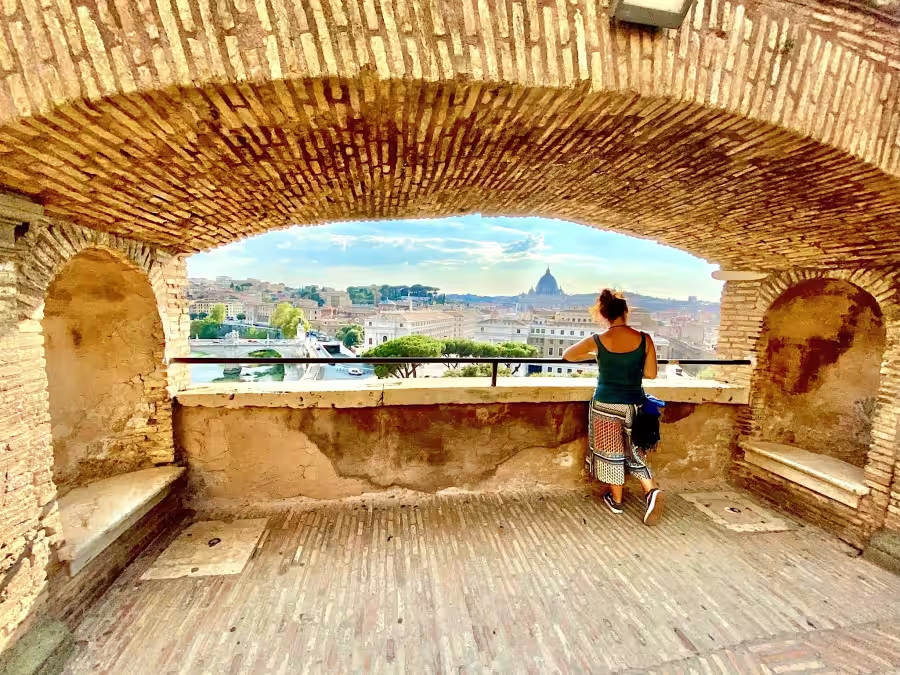
Even today, that Roman core is still unmistakable. As you enter the castle, the towering concrete walls and the great spiral ramp climbing toward the burial chamber are all part of Hadrian's original design.
For almost a century, the building fulfilled exactly the purpose for which it had been created. But Rome rarely leaves its monuments untouched.
As the Roman Empire weakened, the mausoleum gradually lost its original purpose and gained a new one. Its massive walls made it one of the strongest structures in the city, and before long it had been incorporated into Rome’s defences during centuries of invasions and political instability.
That transformation came at a cost. Marble statues were destroyed, decorative stone was stripped away, and the imperial urns were lost. The monument that had once celebrated imperial power now became a fortress built for survival.
As the fortress took on its new role, it also acquired the legend that would give it its modern name. According to tradition, during the plague of 590, Pope Gregory the Great saw the Archangel Michael appear above the fortress, sheathing his sword as a sign that the epidemic had come to an end. This vision gave the monument its enduring name: Castel Sant’Angelo, the Castle of the Holy Angel.
The bronze statue of the angel that crowns the castle today is a reminder of that story, while an earlier version can still be seen inside the castle in the Cortile dell’Angelo.
By the late Middle Ages, Castel Sant’Angelo had become inseparable from the papacy. After the popes returned from Avignon in the 14th century, the fortress became one of their most important strongholds, designed not only for defence but also as a place of refuge in times of crisis.
Its walls were strengthened, bastions for heavy cannons were added, and the castle was connected to the Vatican by the Passetto di Borgo, a fortified corridor that allowed the pope to flee unseen whenever danger threatened.
It proved its value during the Sack of Rome in 1527. As imperial troops overran the city, Pope Clement VII escaped through the Passetto and spent months sheltering inside the castle while Rome descended into chaos.
Yet Castel Sant’Angelo was never only a fortress. Within its defensive walls, the popes also created spaces of ceremony and power. Reception halls and private apartments were richly decorated with frescoes and stucco, turning parts of the fortress into an unexpected papal residence.
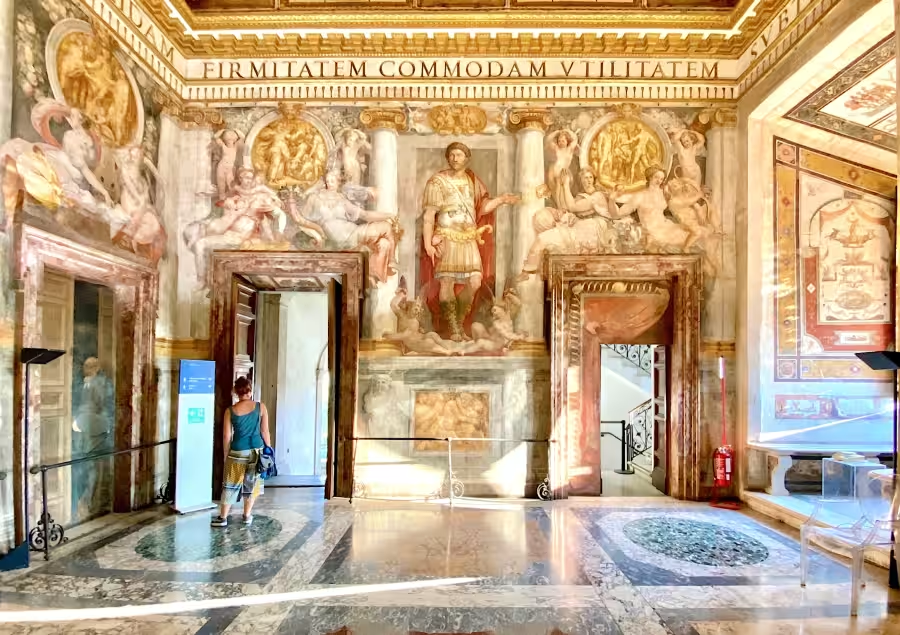
Walking through the castle today, you still encounter both identities side by side: massive defensive walls standing next to elegant Renaissance rooms, reminding you that this building functioned both as a fortress and as a papal residence.
Not everyone who entered Castel Sant’Angelo came willingly.
For centuries, it also served as one of the prisons of the Papal States. Political prisoners, nobles, and religious figures all passed through its cells, including the philosopher Giordano Bruno and the adventurer Cagliostro. Even executions took place here, adding yet another dark side to the castle’s long history.
Following the unification of Italy in 1870, Castel Sant’Angelo passed from papal control into the hands of the new Italian state. After a brief period as military barracks and prison, it was eventually transformed into the museum you can visit today.
Few places in Rome show the city’s constant reinvention quite like Castel Sant’Angelo.
An emperor’s mausoleum became a medieval fortress, then a papal refuge, a prison, military barracks, and finally a museum, all without ever losing the layers that came before. As you climb through Castel Sant’Angelo, you’re not just exploring one monument. You’re moving through nearly two thousand years of Rome, one transformation at a time.
If you’d like to experience those transformations for yourself, join our Castel Sant’Angelo tour and explore how each level reveals a different chapter of Rome’s history.