Marketing Tours
Posted on May 14, 2026 5 min read

Posted on May 14, 2026 5 min read
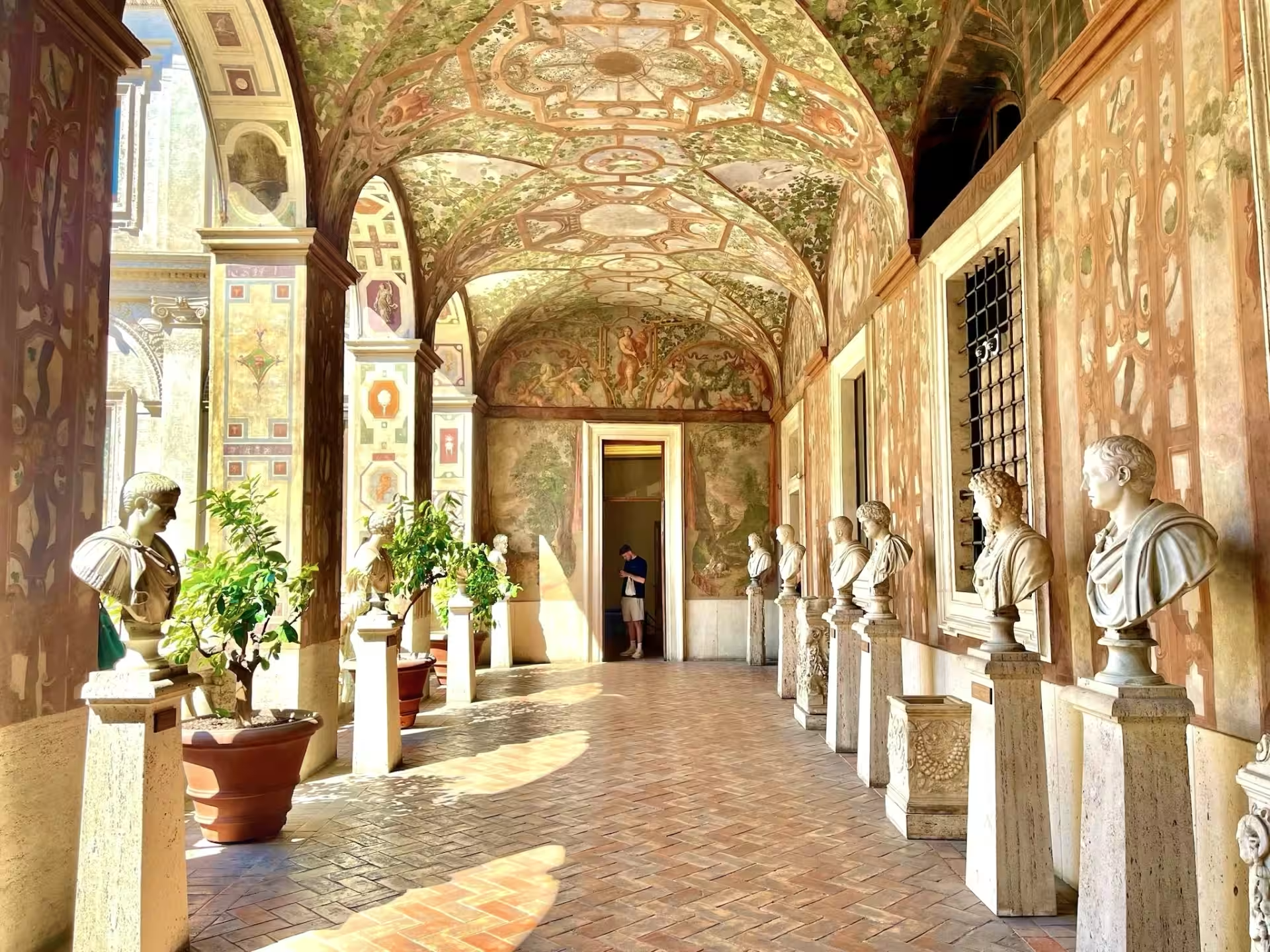
Rome is incredible - but it can also be loud, crowded, hot, and non-stop. Between traffic, scooters, tour groups, and packed piazzas, sometimes you just need a place to pause for a little while.
That’s where Rome's cloisters come in. Hidden behind the city’s church façades are peaceful courtyards filled with gardens, fountains, and silence. Some are medieval, others Renaissance, but they all share the same feeling: stepping out of Rome’s chaos for a few minutes without ever really leaving the city.
Here are some of the cloisters worth slowing down for.
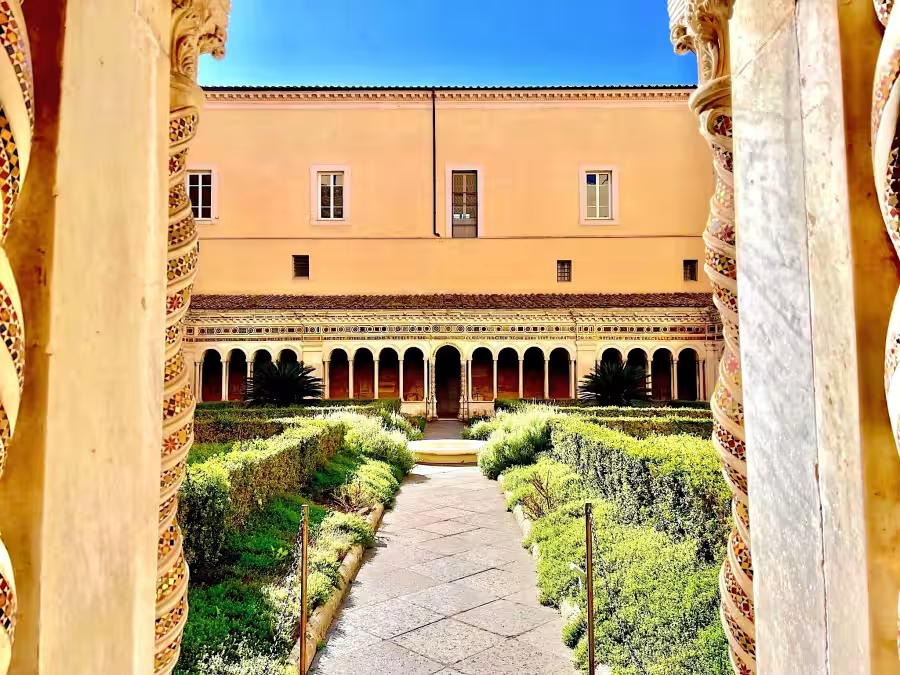
Tucked inside San Giovanni in Laterano - the pope’s official church and one of Rome’s four papal basilicas - this cloister feels surprisingly hidden considering the scale and the importance of the basilica next to it. Step inside and the atmosphere changes immediately: traffic noise fades, the air seems to slow down, and rows of elegant twisted columns quietly guide you around the courtyard.
Built in the 13th century by the father-and-son craftsmen Pietro and Niccolò Vassalletto, it’s the largest medieval cloister in Rome and one of the finest examples of the Cosmatesque style. Look closely and the details start to unfold: mosaic inlays, braided columns, and geometric marble friezes running above the arches. It’s refined, balanced, and incredibly calm - a complete contrast to the busy streets outside.
This one feels calmer than most major basilicas in Rome from the moment you arrive. Palm trees sway in the large courtyard outside, Saint Paul stands in the centre, golden mosaics glow across the façade. And because the basilica sits outside the historic centre, the crowds tend to thin out before you even step inside.
Hidden inside is the cloister, one of Rome’s great medieval spaces, and a lucky survivor of the devastating fire that destroyed much of San Paolo in the 19th century. And it’s still beautiful: spiral columns, mosaic inlays, marble bands, and carved figures tucked between the arches.
It’s Cosmatesque detail at full volume, created by the Vassalletto workshop, the same family of craftsmen behind the cloister of San Giovanni in Laterano. Around the space, fragments from the old basilica, Roman sarcophagi, and medieval inscriptions add another layer - quiet reminders of everything this place has lived through.
Part of the former Baths of Diocletian, this cloister feels less like a hidden corner and more like open breathing space. Vast and filled with light, it gives you a very different kind of quiet from the medieval cloisters elsewhere in Rome.
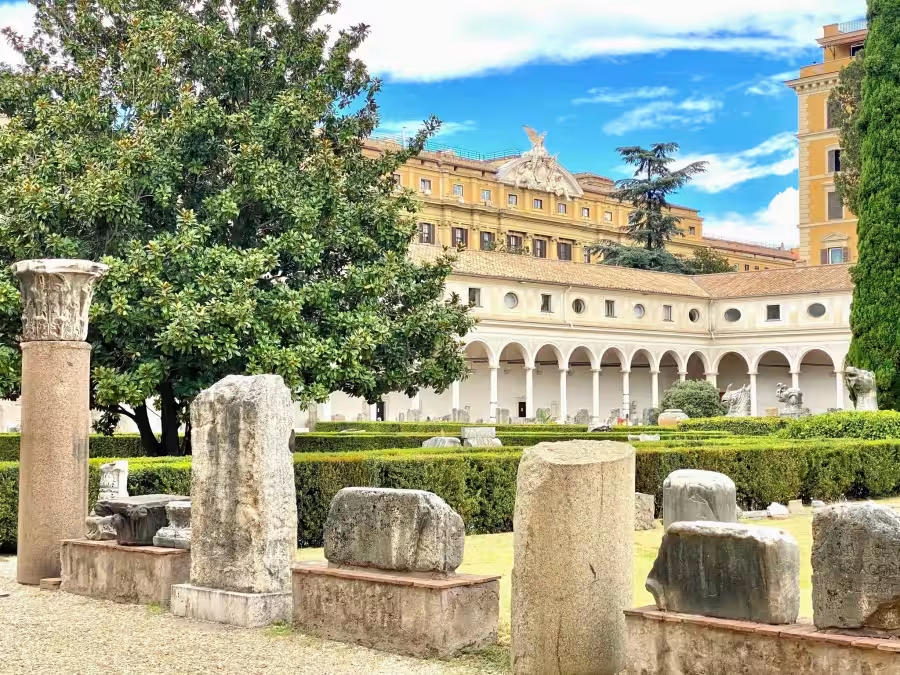
Michelangelo helped transform parts of the ancient bath complex into the adjacent church in the 16th century, and that sense of scale still shapes the space today. Wide walkways and long corridors give the courtyard a monastic calm despite sitting right beside Termini station and one of the busiest parts of the city.
You enter the cloister through the Baths of Diocletian museum, so it’s not a quick free stop - but totally worth it. The museum itself is a hidden gem, with ancient sculptures, monumental bath remains, and surprisingly few crowds.
Just a few steps from Piazza Navona’s crowds and restaurants, the cloister of Santa Maria della Pace feels almost improbable. Designed by Bramante during the Renaissance, it’s smaller and simpler than some of the others on this list, but that’s part of its charm.
The proportions are beautifully balanced, the arches clean and harmonious, and the whole courtyard feels light and elegant. Sitting here after navigating the chaos around Piazza Navona feels a bit like discovering a hidden pocket of air in the middle of the city.
Today it’s also part of a cultural space with exhibitions and a café, making it one of the easiest central cloisters to actually pause in.
If one cloister truly feels removed from modern Rome, it’s this one. Hidden behind fortress-like walls on the Celian Hill, Santi Quattro Coronati already feels secret before you even enter. Inside, a maze-like jumble of courtyards, chapels, and monastic spaces makes the whole complex feel strangely timeless.
The cloister itself is simple, medieval, and deeply atmospheric. No grand decoration, no crowds, no noise - just brick arcades, a small garden, and the feeling that the outside world has somehow disappeared.
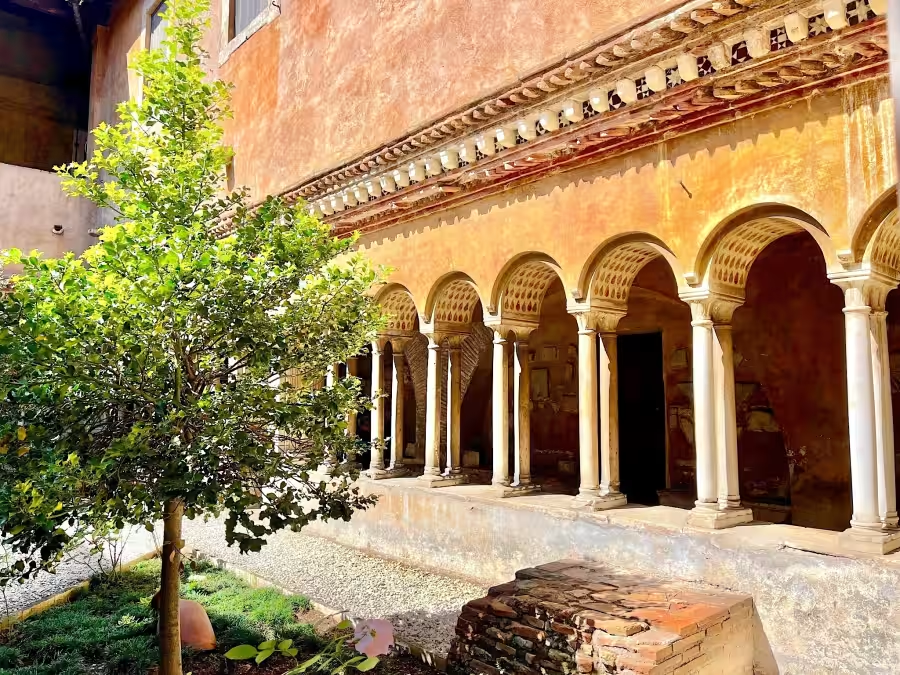
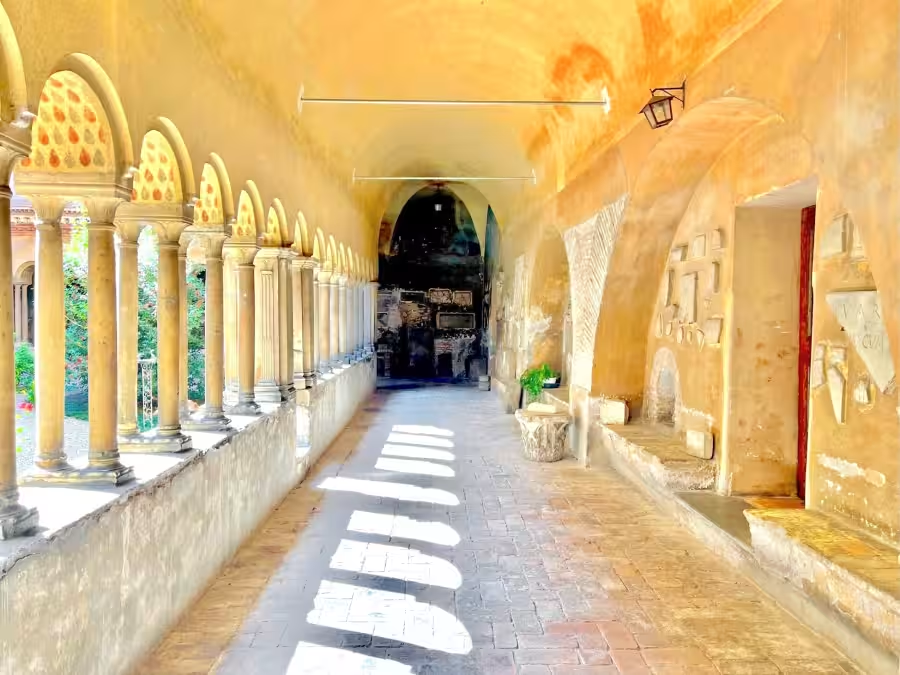
And if you want to go deeper, small hidden spaces like the Oratory of Saint Sylvester and the Aula Gotica preserve some of the city’s most fascinating medieval frescoes, often missed entirely by visitors. There’s usually a small fee and access can be limited, but if it’s open, it’s well worth seeing.
Rome isn’t always about ticking off another monument. Sometimes the best thing you can do is step behind a church door, sit in the shade for a few minutes, and recharge before stepping back into the city. Cloisters do that better than almost anywhere else in Rome.