Touriks Team
Posted on Jun 25, 2025 4 min read

Posted on Jun 25, 2025 4 min read
The Basilica di Santa Cecilia in Trastevere is already a rewarding stop. Most come for the church itself - the medieval interior, the saint’s tomb, the evocative crypt - and move on without realising that one of Rome’s most important medieval frescoes is waiting right next door.
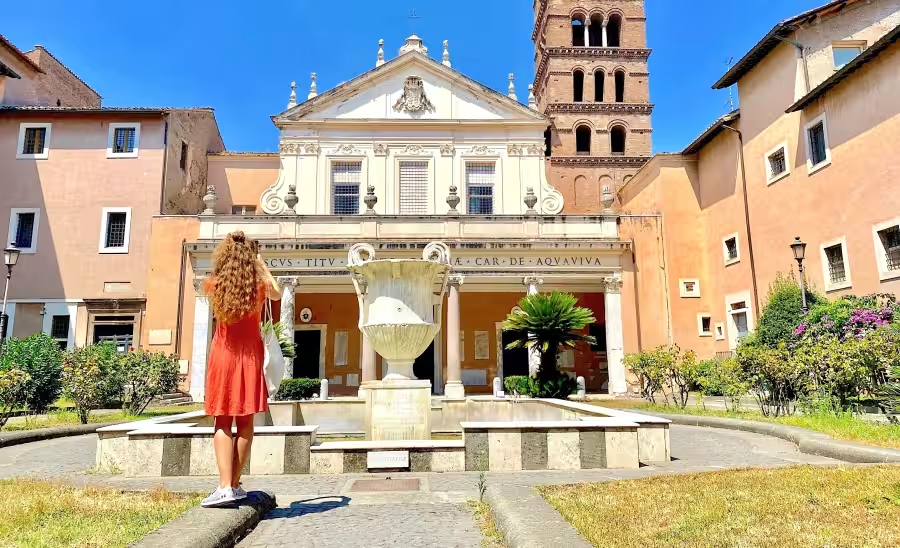
To find it, you step through a modest door to the left of the church entrance, into a quiet space once connected to the monastery. It feels intimate rather than monumental, removed from the flow of the basilica, and that’s exactly what makes the experience so memorable.
Here survives Pietro Cavallini’s Last Judgement, painted around 1300. It doesn’t announce itself and it is often missed entirely. Yet once you’re standing in front of it, it feels like a quiet secret you’re being let in on - a work of extraordinary importance revealed only to those who know where to look.
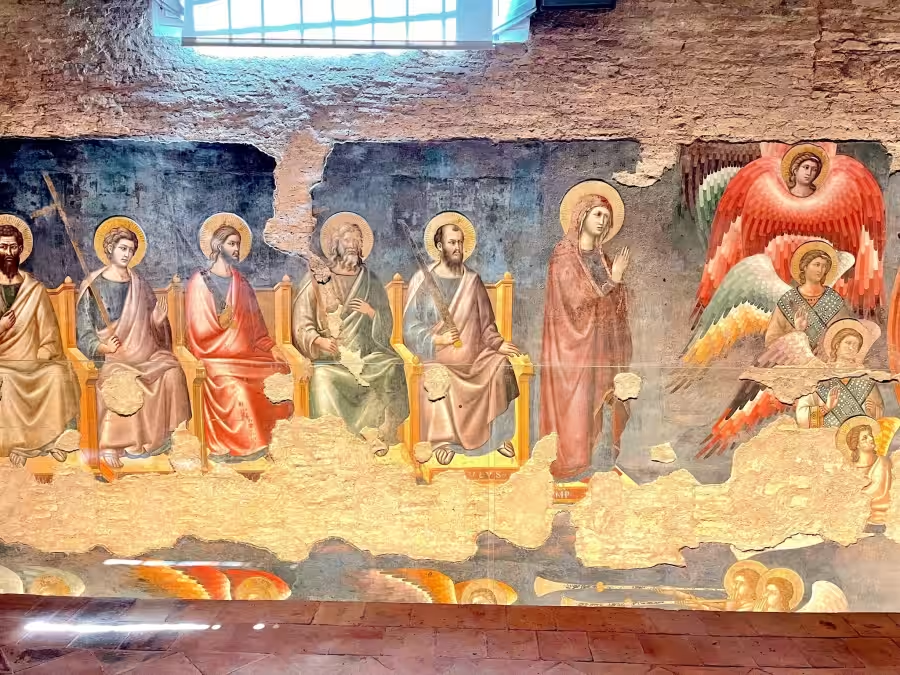
The very fact that Cavallini’s Last Judgement still exists is remarkable. Medieval wall paintings in Rome were frequently altered, covered, or lost as buildings changed and artistic tastes shifted. This fresco spent centuries partially hidden and only came fully back into view in the early 20th century.
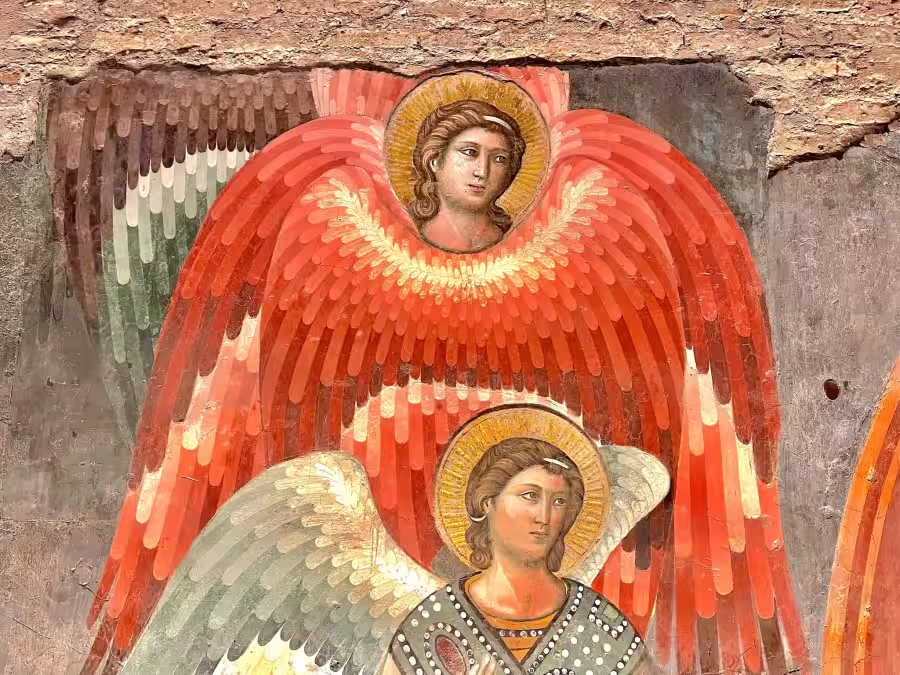
What remains today is not the complete original cycle - but it is strikingly alive. The surviving sections are vivid and legible, a rare survival from a period that has left relatively few intact works in the city. Enough remains to grasp its ambition, its technical mastery, and its expressive power. Standing in front of it, it’s hard not to feel a quiet sense of luck.
At first glance, the scene feels familiar. Christ appears in judgement, surrounded by angels and saints, arranged according to long-established Byzantine conventions of hierarchy and symbolism - a visual language that had dominated sacred art for centuries.
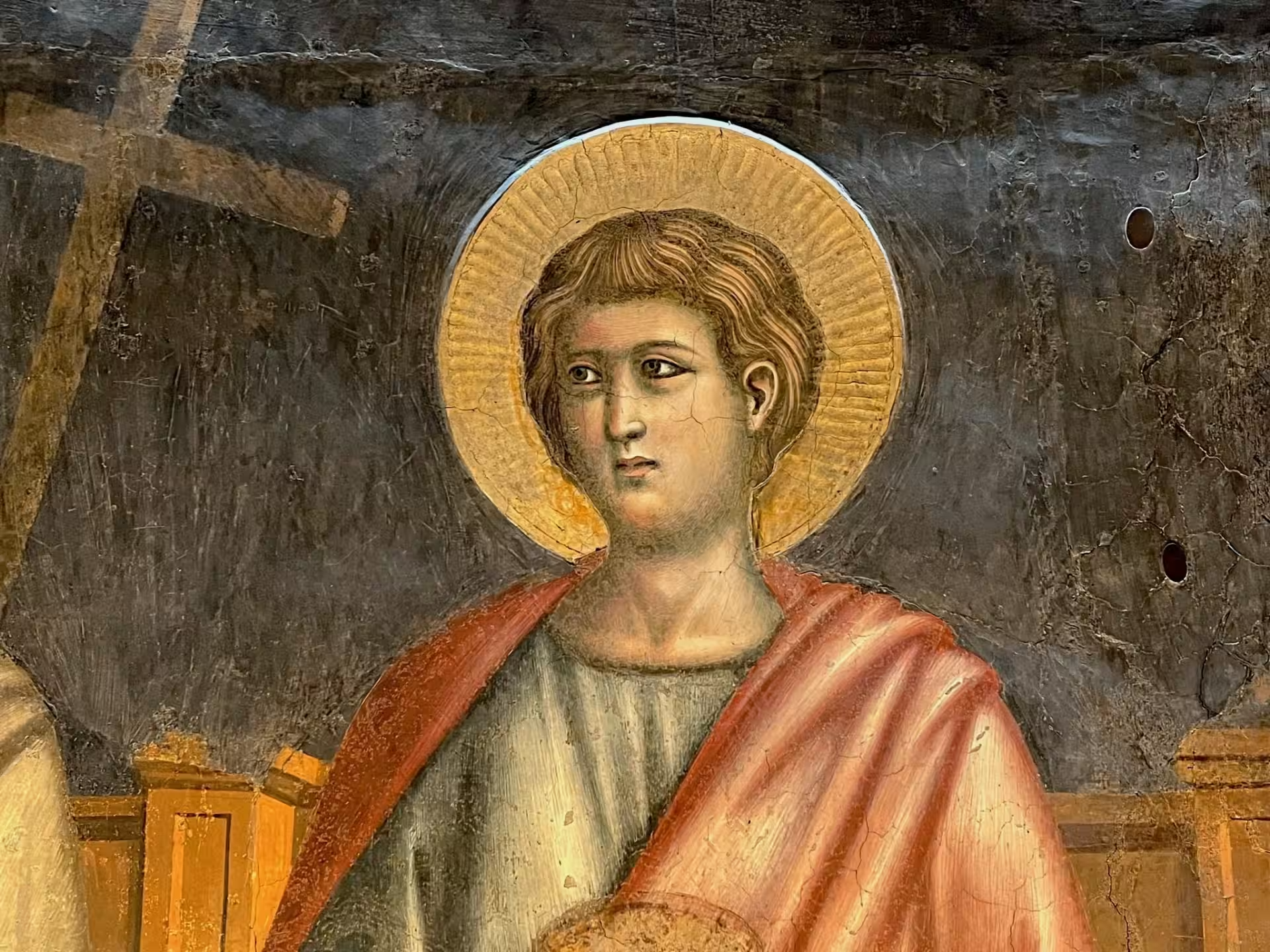
But look closer, and the transition becomes clear. These figures have weight and presence. Drapery falls and gathers around bodies instead of forming flat, decorative patterns. Faces are individual and expressive, not symbolic masks. Cavallini is still working within a medieval framework - but he’s already pushing it forward.
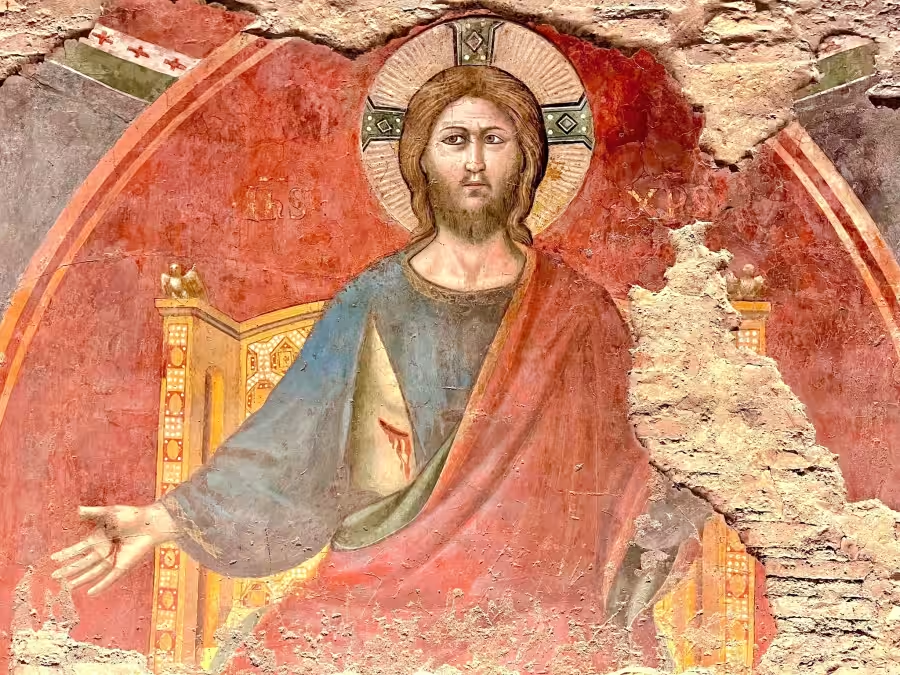
This fresco belongs to a moment when Italian artists began to observe the world more closely, introducing volume, depth, and physical realism into sacred imagery. You’re watching medieval art evolve, right in front of you.
That change is especially visible in the apostles. They are not rigid or frontal, but subtly turned toward each other. Light and shadow model their faces, while garments pull and fold around shoulders, arms, and bellies, revealing the solid bodies beneath.
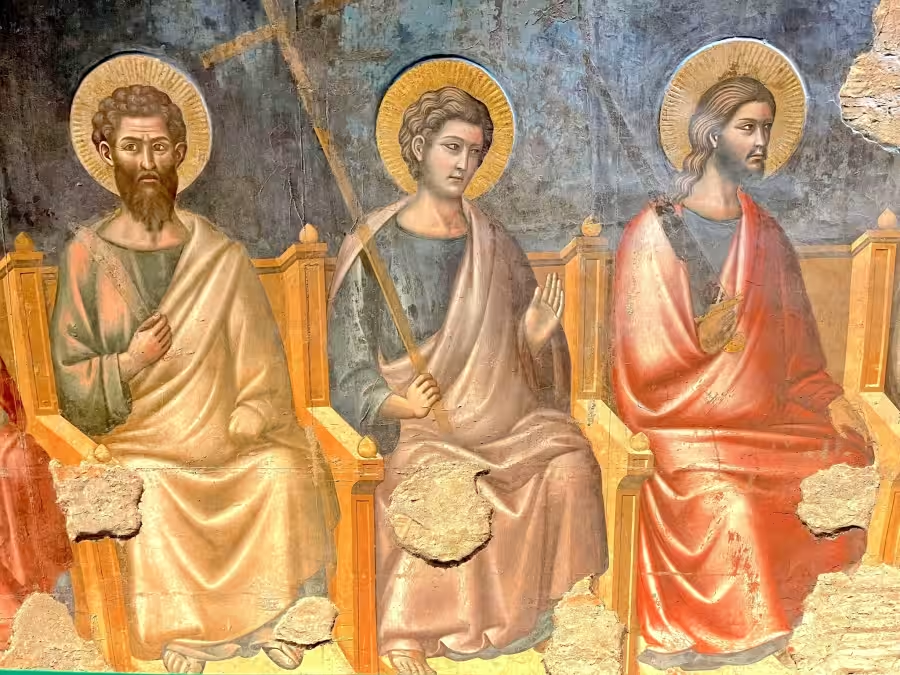
The effect is subtle but powerful: these are not abstract figures, but human figures given real presence and weight. It may feel understated today, but around 1300 this attention to the body was quietly revolutionary. Cavallini treats the human form as something worthy of carrying meaning - not flattening the sacred, but bringing it closer.
Rome is often defined by its ancient ruins and High Renaissance masterpieces, while medieval art tends to fall into the background. Cavallini’s Last Judgement tells a different story.
It is considered one of the finest examples of medieval religious painting in the city - not as a stepping stone toward the Renaissance, but as a fully formed achievement in its own right. It shows that artistic change in Rome did not arrive suddenly, but emerged gradually.
Part of the fresco’s power lies in how you encounter it. There’s no queue, no pressure to move on, no sense of being rushed. You step into a small, tranquil space and are free to look - really look - for as long as you like.
And that’s why it stays with you. Not because it overwhelms, but because it rewards attention: to faces, to bodies, to the way the human and the divine begin to share the same visual language.
Want to discover the Trastevere behind the ivy-covered lanes and aperitivo spots, with more hidden treasures like this one along the way? Join our guided Trastevere tour and explore the neighbourhood beyond the obvious.