Touriks Team
Posted on Jun 25, 2025 3 min read

Posted on Jun 25, 2025 3 min read
Step into almost any historic church in the city and your eyes instinctively lift upward, toward golden mosaics, painted ceilings, and ancient frescoes. But some of Rome’s most fascinating artworks are not above you, they’re under your feet.
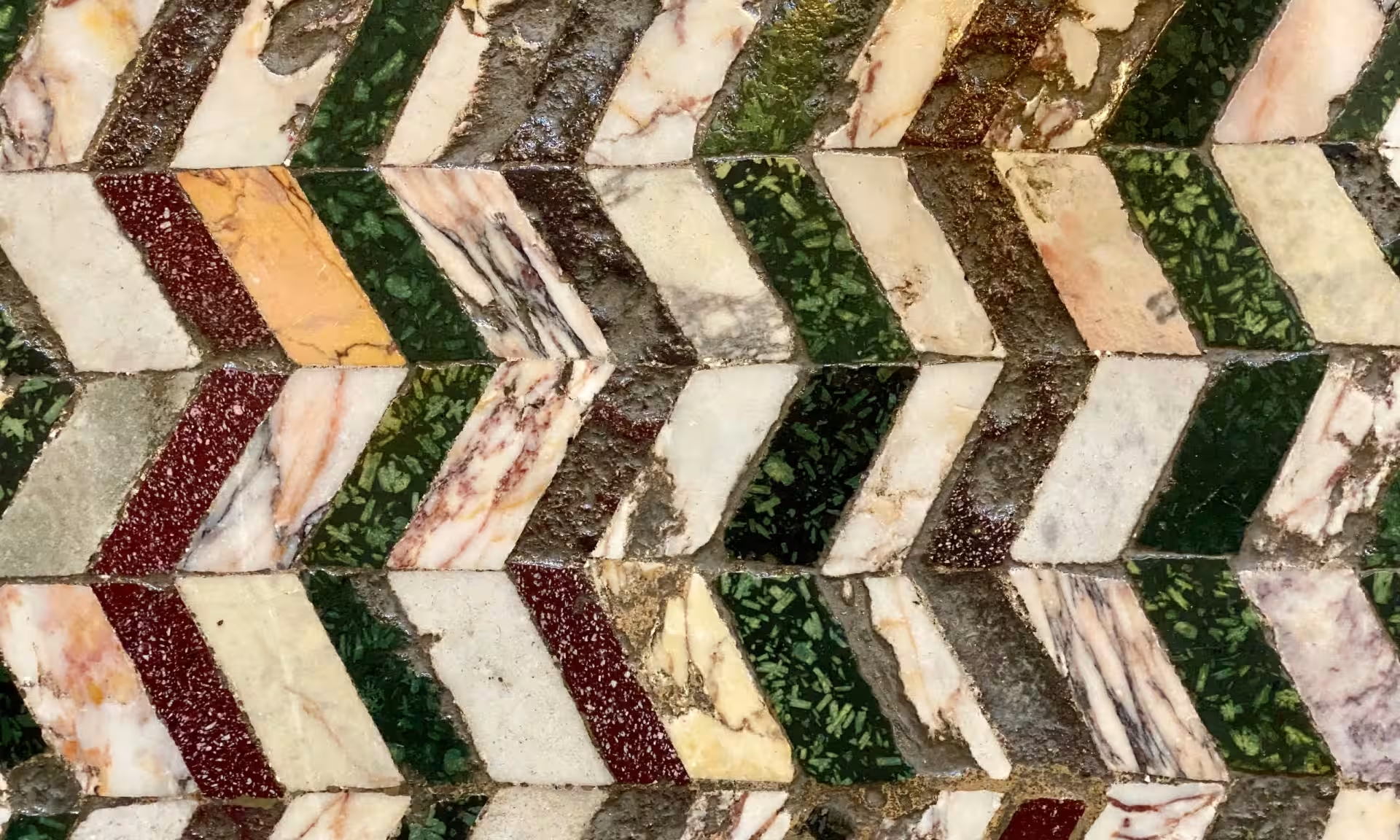
Cosmatesque floors are medieval mosaics crafted from coloured marble and glass, arranged into intricate geometric designs. You’ll recognise them instantly: spirals, circles, braids, and interlocking bands that seem to shift as you move across them.
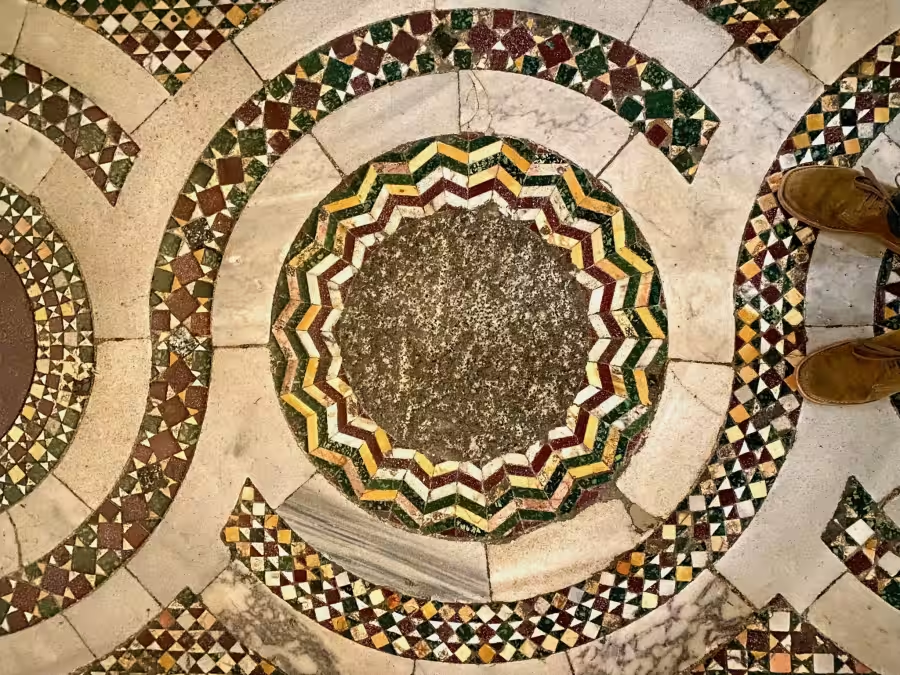
But for medieval viewers, these patterns were far more than decoration. They were a way of expressing ideas visually. Circles suggested eternity, squares represented the earthly world, and the braided lines wove the two together. The floor became a kind of map - not of a place, but of how the world itself was understood.
The name comes from the Cosmati, a family of Roman craftsmen active in the 12th and 13th centuries. Their work combined influences from Byzantine art with local Roman traditions, creating something entirely new: a style that is both precise yet full of movement.
One of the most striking aspects of Cosmatesque floors is where their materials come from. By the time the Cosmati were working, ancient Rome had long fallen into ruin. But its marble survived, scattered across temples, baths, and abandoned buildings.
The Cosmati reused these fragments, cutting and polishing them into new shapes and patterns. Deep red porphyry from Egypt, green serpentine from Greece, and yellow marble from North Africa were all brought together into a single surface.

This practice, known as spolia, was more than practical reuse. It gave ancient materials a new role within Christian spaces. Pieces of the Roman past were reorganised into a new visual language, carrying their history into a different world.
Cosmatesque floors appear in several churches across Rome: in Santa Maria Maggiore, San Giovanni in Laterano, Santa Maria in Cosmedin, and even in parts of the Vatican.
One of the most striking examples you can find in the Basilica of San Clemente. Here, the floor stretches across the nave in wide, rhythmic bands. Rope-like braids subtly guide your eye forward, roundels ripple in between them, and the entire surface feels carefully balanced.
And here’s a fitting detail: San Clemente itself is a story of layers. The 12th-century basilica rests above a 4th-century church, which in turn sits on a Roman house and a pagan temple. The floor reflects that same idea. Ancient materials, medieval craftsmanship, and Christian symbolism come together into a single whole.
Once you recognise Cosmatesque floors, you start to see them throughout the city. They don’t demand attention in the way a ceiling or fresco might, but they reward it.
Next time you step into a Roman church, pause before looking up. Look down instead. You’re standing on centuries of faith, symbolism, and craftsmanship still doing exactly what they were designed for: guiding your movement, shaping your space, and quietly telling a story.