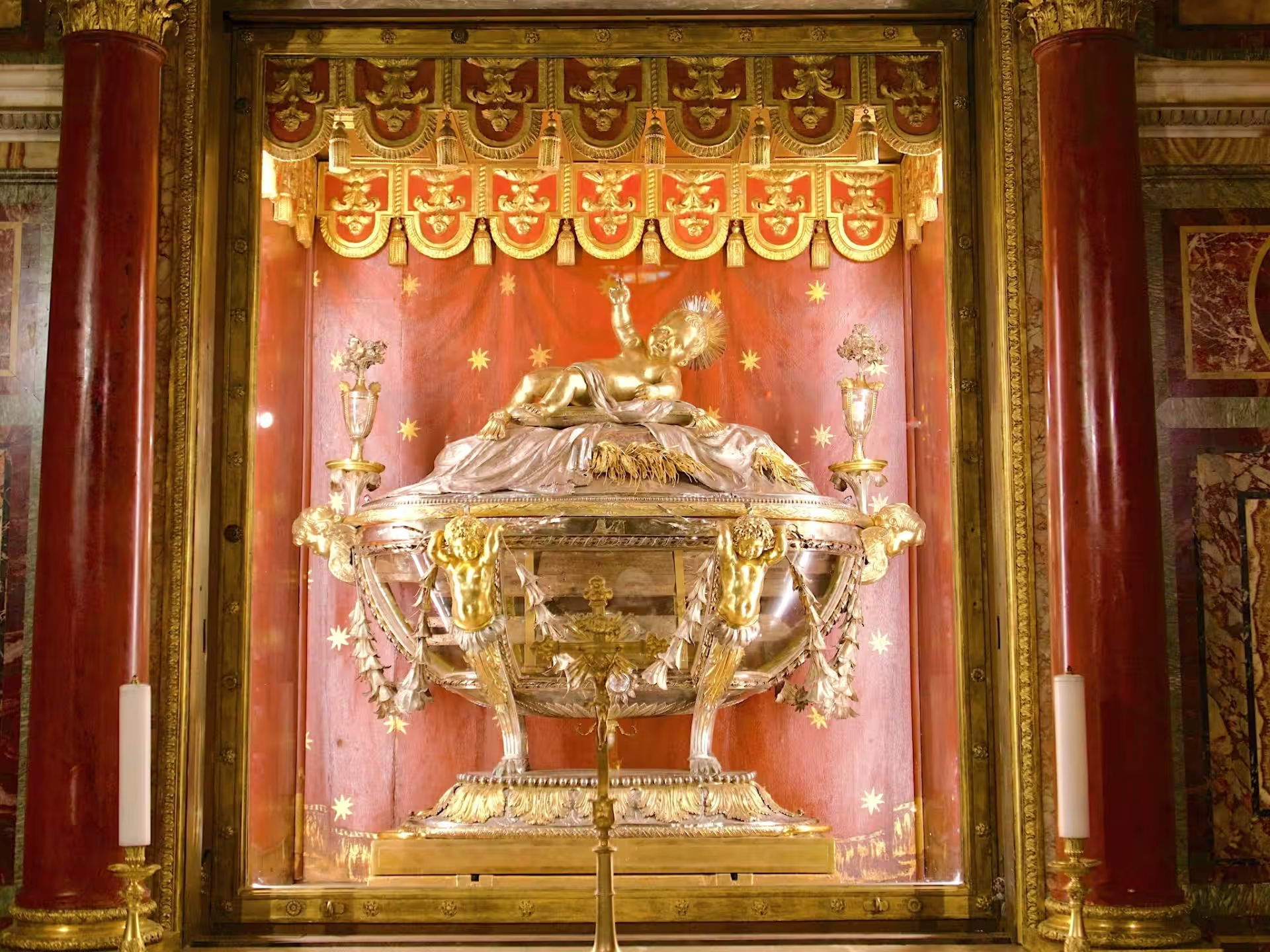
Walk into enough churches in Rome and sooner or later you’ll start to notice them: bones placed beneath altars, chains preserved behind glass, and fragments of wood or cloth guarded like treasure. To our modern eyes, relics can feel strange, even a little unsettling.
But for centuries, they were among the most powerful objects a person could encounter. They inspired devotion, drew pilgrims across Europe, and turned Rome into one of Christianity’s great pilgrimage cities.
Why Relics Became So Important
A relic could take many forms: bones of saints, fragments of the True Cross, chains, pieces of cloth, or even a thorn or nail associated with Christ’s Passion. They were believed to create a physical link to saints, martyrs, and sacred events, and that being near them brought you closer to holiness itself.
People travelled enormous distances to pray beside them or touch them, hoping for healing, protection, miracles, or simply the comfort of proximity to something sacred. Over time, this devotion became deeply woven into medieval Christianity. Churches competed to house important relics, and entire cities built their identity around them.
But that demand also created controversy. Relics were bought, sold, stolen, and sometimes forged, which is why questions of authenticity still surround many of them today. Yet their fascination has never really gone away.
How Rome Became a City of Relics
Rome’s story with relics begins underground. In the first centuries of Christianity, believers gathered at the tombs of martyrs buried in the catacombs just outside the city walls. In the 4th century, after Christianity became the official religion of the Empire under Constantine, this devotion expanded dramatically.
A key figure in this transformation was Helena, mother of Constantine. Tradition says she travelled to the Holy Land and returned with relics from Christ’s Passion, including fragments of the True Cross. Whether history or legend, her story helped shape Rome’s growing identity as a city of sacred objects.
From this point on, Rome began to fill with places tied to saints, martyrs, and the life of Christ. Churches rose over ancient burials, relics found their way into chapels, and little by little, the city began to take shape as the Rome we still recognise today.
St. Peter’s Basilica: The Tomb of an Apostle
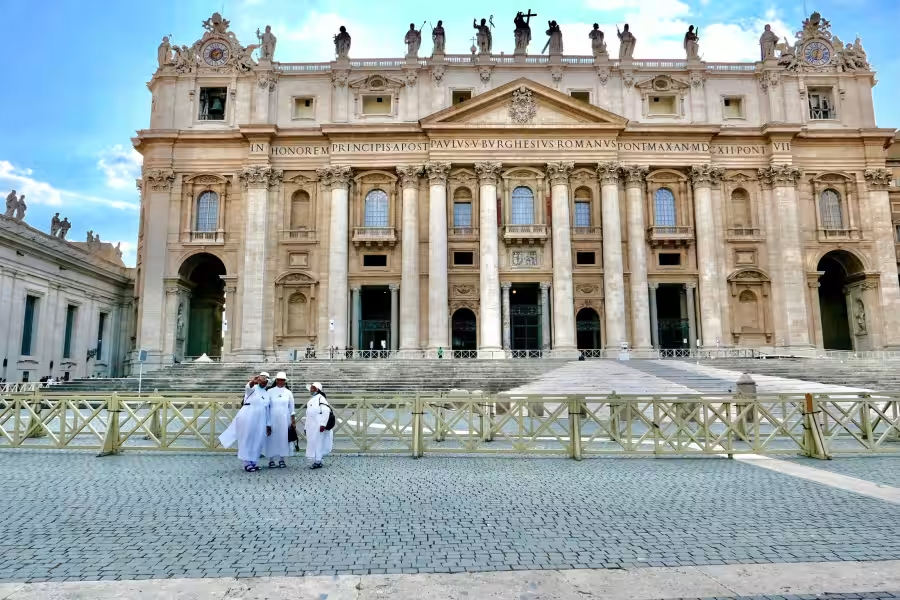
Of course, the most famous relic site is St. Peter's Basilica. Long before the present basilica existed, pilgrims were already coming here to pray near the burial site believed to be that of Saint Peter - a tradition that continues today.
Beneath the vast church, you can descend into the Vatican Grottoes, where Peter’s tomb is thought to lie. Even deeper, the Vatican Necropolis - accessible only through the Vatican’s official Scavi Tour - reveals the ancient burial ground beneath the church and brings you even closer to his tomb.
St. Peter’s also preserves relics connected to Christ’s Passion, including the Holy Lance and the Veil of Veronica, displayed on rare liturgical occasions. Bernini later designed niches into the massive piers supporting the dome to house these objects, turning the architecture itself into monumental reliquaries.
Santa Croce in Gerusalemme: Rome’s Passion Relics
Few churches in Rome are as closely tied to relic tradition as Santa Croce in Gerusalemme.
Tradition connects the site directly to Helena and her return from the Holy Land. The church even takes its name from this journey: soil from Jerusalem is said to have been brought back and spread across the grounds of Helena’s former imperial residence here, symbolically turning the site into a kind of extension of the Holy Land itself.
Inside, the Chapel of Relics still preserves some of the most significant Passion objects in Rome, including pieces of the True Cross, a nail from the Crucifixion, thorns from the Crown of Thorns, and the Titulus Crucis - the inscription said to have hung above Christ on the Cross.
San Giovanni in Laterano & the Scala Santa
San Giovanni in Laterano, the pope’s official seat and one of Rome’s oldest major basilicas, preserves several important relics tied to early Christianity. Above the high altar are reliquaries traditionally believed to contain the heads of Saints Peter and Paul, while a wooden panel linked to the Last Supper is kept in the left transept.
Just across the square, you’ll find the Scala Santa - the Holy Stairs - venerated as the staircase climbed by Christ during his Passion. At the top sits the Sancta Sanctorum, once the private chapel of the popes and one of medieval Rome’s most important devotional spaces, still filled with hidden relics today.
Relics Across the City
Those are only the best-known examples. Relics are woven all across Rome’s churches, from grand basilicas to quiet side chapels.
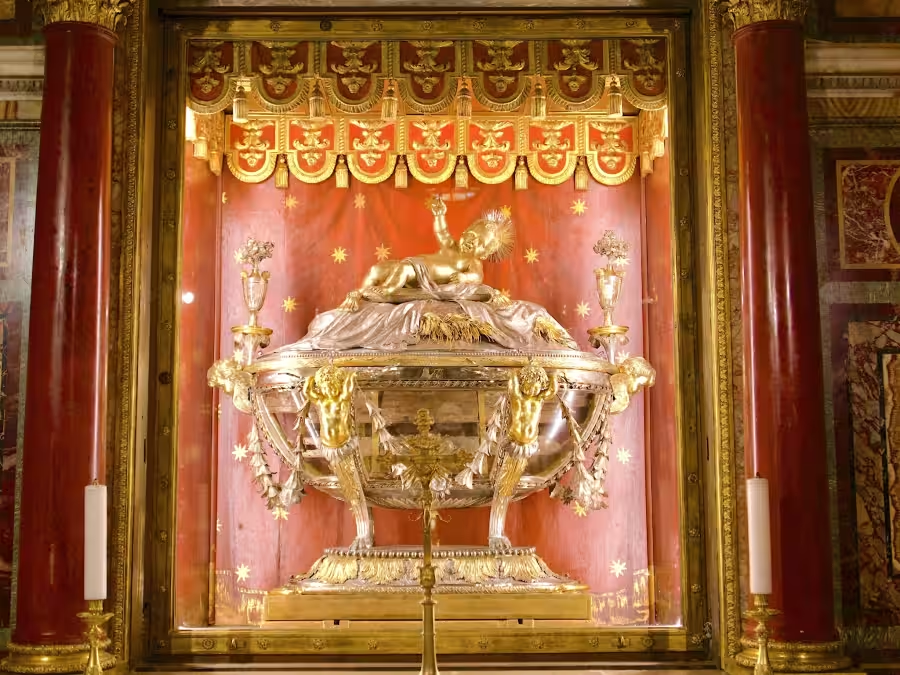
Beneath the altar of Santa Maria Maggiore are fragments associated with Christ’s manger, preserved inside a gold-and-silver reliquary shaped like a cradle. At Saint Paul Outside the Walls, chains linked to Saint Paul’s imprisonment are displayed beside the apostle’s tomb. And tucked away in a small side chapel at Santa Prassede, you’ll find part of the column associated with Christ’s Flagellation - easy to miss unless you know it’s there.
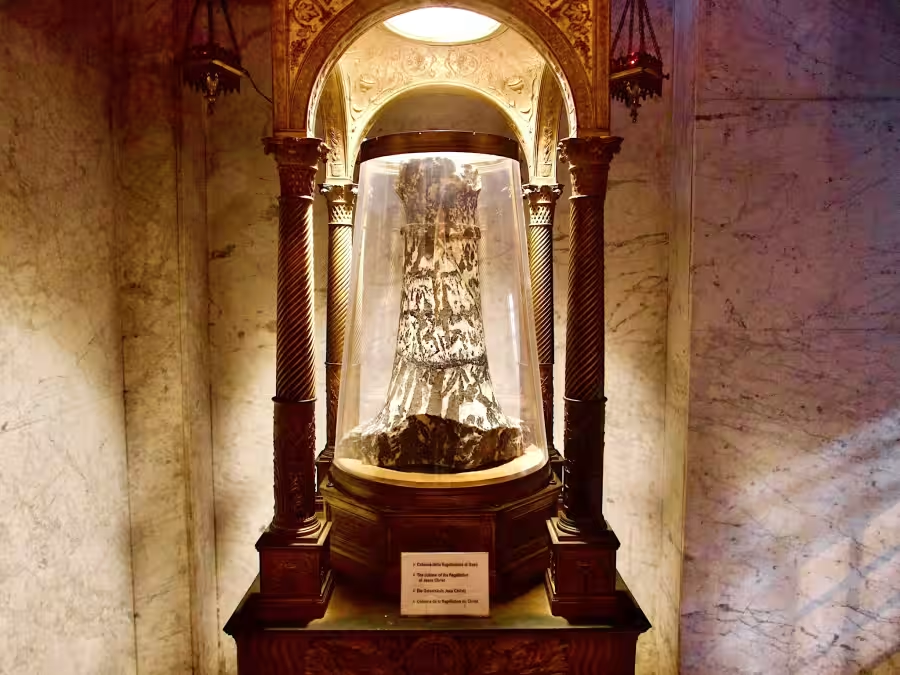
Even if you’re not religious, relics help make sense of the city around you. They explain why certain churches became so important, why basilicas rose above tombs, and why Christian Rome so often grew out of burial sites, martyrs’ tombs, and places of devotion.
Interested in exploring this side of Rome more deeply? Our Underground Temples & Crucifixion Relics tour dives further into these churches, their relics, and the stories behind them.