Marketing Tours
Posted on May 20, 2026 4 min read

Posted on May 20, 2026 4 min read
Roman baths were once among the busiest places in the ancient city. People came here to exercise, study, socialise, relax, debate politics, visit libraries, and spend hours moving through a circuit of hot, warm, and cold pools. At their peak, the Baths of Caracalla and the Baths of Diocletian were the two largest bath complexes in the empire - vast architectural worlds built to impress.
Visiting them today, however, feels completely different.
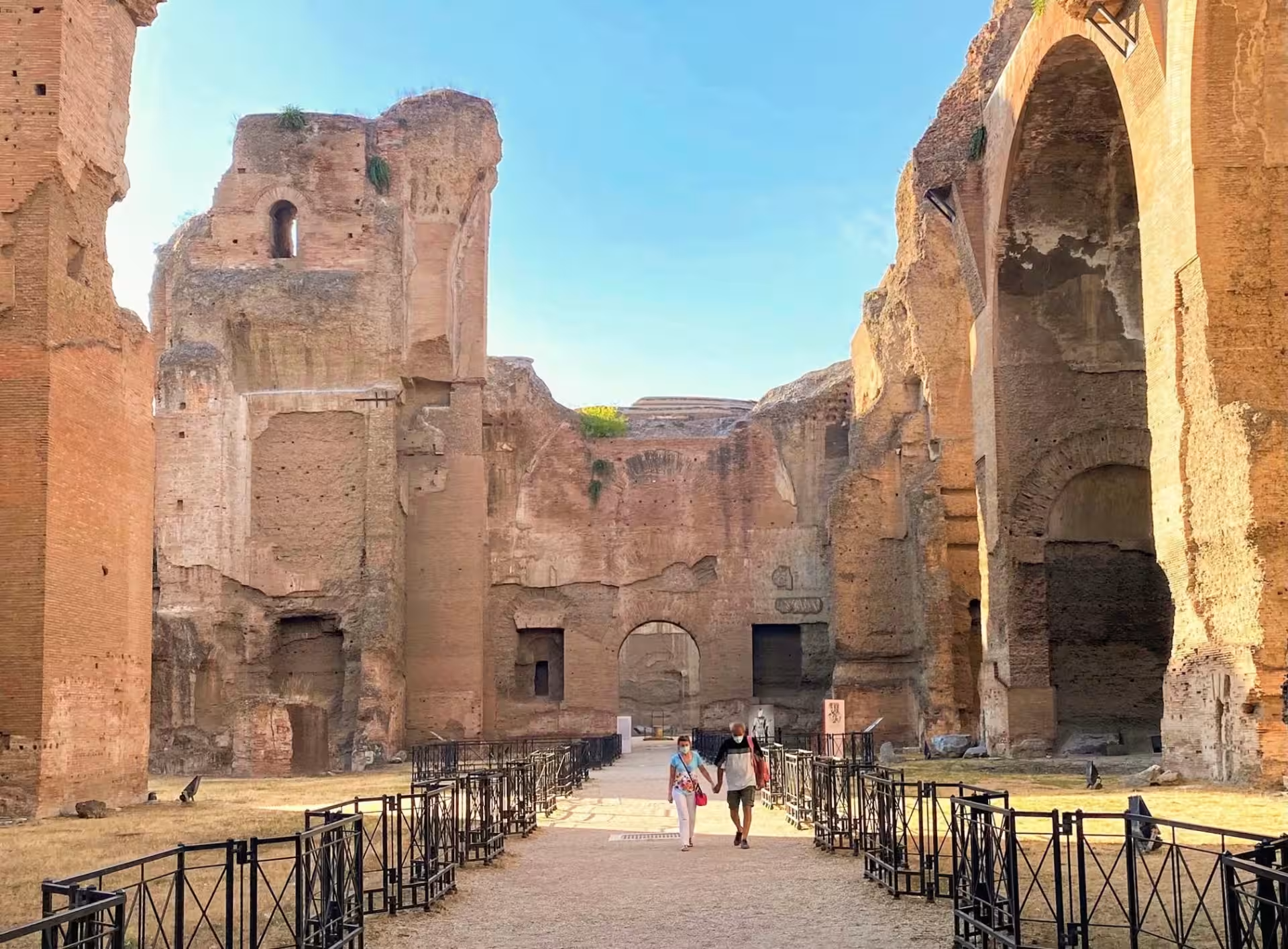
The Baths of Caracalla are Rome at its most cinematic: colossal ruins, soaring brick walls, umbrella pines, and open skies that make ancient Rome feel gigantic. The Baths of Diocletian tell a quieter, more layered story: one of transformation, where parts of the ancient complex were absorbed into churches, cloisters, and museums still in use today.
The Baths of Caracalla still feel overwhelming nearly two thousand years later. Massive brick walls rise high into the sky, vaulted spaces open above you, and the sheer scale makes you suddenly feel very small. Even stripped of their marble decoration, the ruins still communicate pure imperial ambition.

Built in the early 3rd century under Emperor Caracalla, the complex could host around 1,600 bathers at a time, with thousands more passing through during the day. Heated floors, enormous pools, gardens, exercise areas, libraries - this was far more than a bathhouse. It was ancient Rome’s version of a giant public leisure centre, built on a scale that still feels almost impossible to imagine.
What makes Caracalla so powerful today is how you experience that scale. You walk beneath towering vaults open to the sky, across vast halls once lined with marble, and past mosaics that still survive beneath your feet. Even in ruin, the baths still feel immense.

Beneath all that grandeur was an enormous hidden machine. Underground corridors housed the furnaces and service areas that powered the baths’ sophisticated heating system, maintained largely through enslaved labour. Even below ground, the complexity of the baths continued.
And unlike many of Rome’s major archaeological sites, Caracalla rarely feels crowded. Umbrella pines sway between the ruins, open walkways stretch beneath towering brickwork, and the whole site feels surprisingly open and breathable.
The Baths of Diocletian were even larger than Caracalla, capable of hosting around 3,000 bathers at once. But visiting them today feels completely different.
Where Caracalla survives as a monumental ruin, Diocletian’s baths became woven into the living city. Over centuries, parts of the complex were transformed into churches, monasteries, museums, cloisters, and gardens - creating a layered space where ancient Rome blends almost seamlessly into later history.

The most striking transformation is the Basilica of Santa Maria degli Angeli e dei Martiri, created directly within the ancient structure in the 16th century under Pope Pius IV, in honour of Christian martyrs. Michelangelo helped redesign the space, adapting the vast Roman halls into a functioning church while preserving their monumental scale. Inside, you still feel the ancient structure around you: soaring vaults, vast interior spaces, and red granite columns surviving from the original complex.
To explore the surviving bath structures more directly, you enter the adjacent museum, now part of the National Roman Museum. Here, another side of the baths emerges: ancient sculptures, archaeological finds, peaceful cloisters, and garden courtyards sit within and around Roman remains. Compared to Caracalla, everything feels more layered and more focused on discovery.

Both bath complexes are extraordinary, but they offer very different experiences.
Caracalla is ideal if you want scale, drama, open ruins, and that cinematic feeling of ancient Rome unfolding around you. Diocletian is better if you’re drawn to layered history: museums, archaeology, cloisters, and the story of how ancient spaces were transformed and reused over centuries rather than preserved as pure ruins.
If you have time, the two actually complement each other perfectly. One shows imperial Rome at its most ambitious; the other reveals what happened after the empire began to change. Seen together, they give a fuller picture of how these ancient baths worked.
To experience them with full historical context and discover how the baths once shaped daily life in ancient Rome, join one of our guided tours of the Baths of Caracalla or the Baths of Diocletian.