Marketing Tours
Posted on Jun 01, 2026 4 min read

Posted on Jun 01, 2026 4 min read
Rome today is filled with churches, basilicas, and centuries of Christian history. But before Christianity came to dominate the city, another religious world existed alongside it: the cult of Mithras, a secretive religion often hidden from view.
Practiced secretly in underground sanctuaries across the Roman Empire, it left behind no sacred texts and very few clear explanations. What survives instead are spaces and images: narrow temples, stone benches, and the strange recurring image of Mithras slaying a bull.
That’s what makes Mithraic Rome so intriguing. It feels physically close, almost intimate, but still difficult to read. You can step into the rooms where initiates gathered, stand before the images they used, and still feel how much of the ritual world remains just out of reach.
Here’s a closer look at what makes Mithras so fascinating, and where you can still find traces of his cult in Rome today.
Mithras was an ancient god with roots in the Persian world, but the version worshipped in the Roman Empire developed into something distinct. From the 1st to the 4th century AD, his cult spread widely, from Britain to North Africa, and became especially popular among soldiers and men connected to the army.
At the centre of almost every Mithraic sanctuary is the same image: Mithras slaying a bull. The scene, known as the tauroctony, shows him wearing a Phrygian cap, gripping the animal with one hand while striking it with the other. Around him appear a snake, a dog, a scorpion, and celestial figures such as Sol, the sun god, and Luna, the moon goddess.
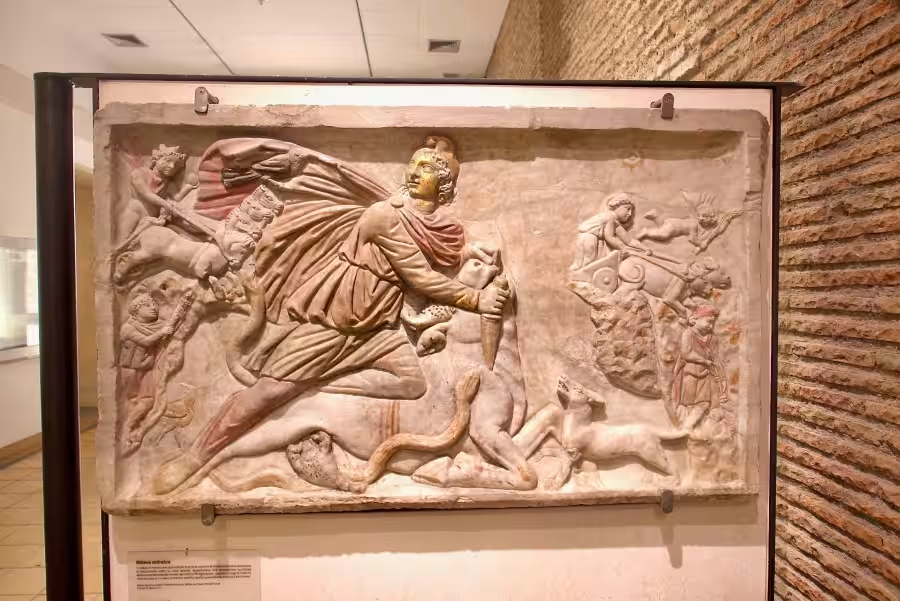
The scene is violent, but also cosmic. Mithras himself was closely connected with the sun and the heavens and linked to cosmic order, harmony, and the balance of the universe. The animals, the sun and moon, and the cave-like setting all suggest a symbolic language that initiates would have understood more fully than we do.
That is part of the difficulty - and part of the appeal. With no surviving Mithraic scripture, interpretation depends on archaeology, inscriptions, and images. The result is a religion that feels unusually close in its physical remains, yet still partly locked away.
Mithraic worship took place in small underground temples known as mithraea. They were often built or shaped to resemble caves, echoing the story of Mithras carrying and killing the bull inside a cavern.
Their layout was usually simple: a narrow central aisle, benches along the sides, and the image of Mithras at the far end. These were not large public temples, but intimate rooms for small groups, initiation, ritual meals, and a strong sense of belonging.

Shared meals seem to have played an important role. Archaeologists have found eating utensils, animal bones, and food remains in many mithraea, suggesting that feasting was part of the ritual and helped reinforce the community of initiates. They also appear to have followed a structured system of grades and referred to themselves as syndexioi: those “united by the handshake.”
At its height, Mithraism was widespread. Rome alone may once have had hundreds of mithraea. Most have disappeared - buried, destroyed, or inaccessible today - but the few that survive feel all the more powerful because of that: small, enclosed spaces that offer a rare glimpse into a hidden religious world.
By the late 4th century, Mithraism faded as Christianity became dominant in the Roman Empire. But traces of it still survive.
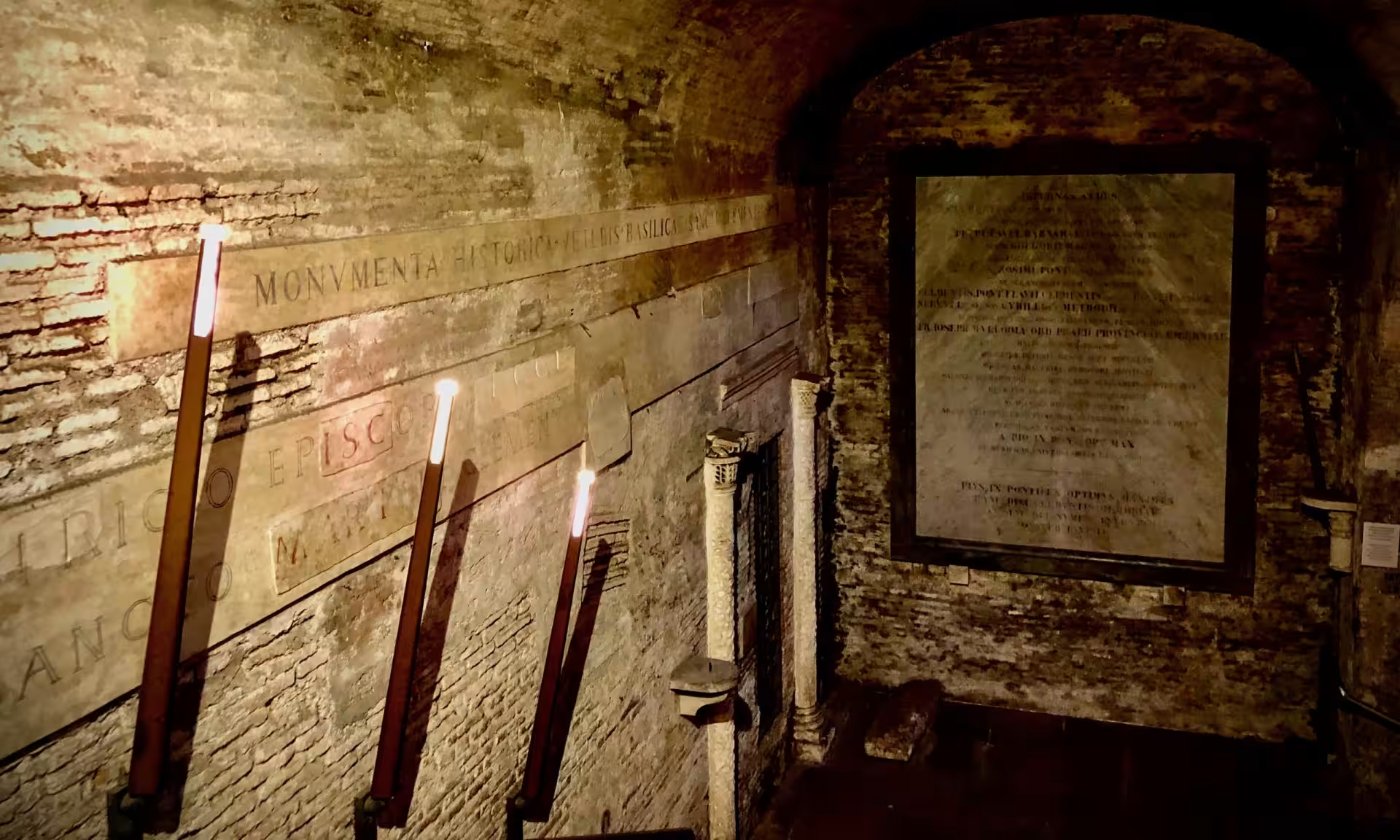
One of the clearest examples is beneath Basilica di San Clemente. There, you descend through layers of history: from a medieval basilica to an earlier Christian church, and finally to Roman buildings and a Mithraic temple. Few sites show so clearly how religious worlds in Rome were not simply replaced, but buried, reused, and built over.

For a broader perspective, Ostia Antica offers something unique. Several mithraea have been found across the ancient port city, close to homes, workplaces, and gathering spaces. Walking through Ostia, you begin to understand that Mithraism wasn’t a rare or isolated practice, but something quietly present throughout the city.
Want to explore these hidden layers with a guide? Visit San Clemente or head out to Ostia Antica to experience this lesser-known side of ancient Rome in context.