Marketing Tours
Posted on May 12, 2026 7 min read

Posted on May 12, 2026 7 min read
Right across from San Giovanni in Laterano, the Scala Santa pulls people in. Many come here for one reason: to climb them on their knees, just as tradition says Christ did before his trial. Even if you arrive skeptical, it has a way of slowing you down.
But the stairs are only half the story. At the top waits something just as important: the Sancta Sanctorum, once the private chapel of the popes.
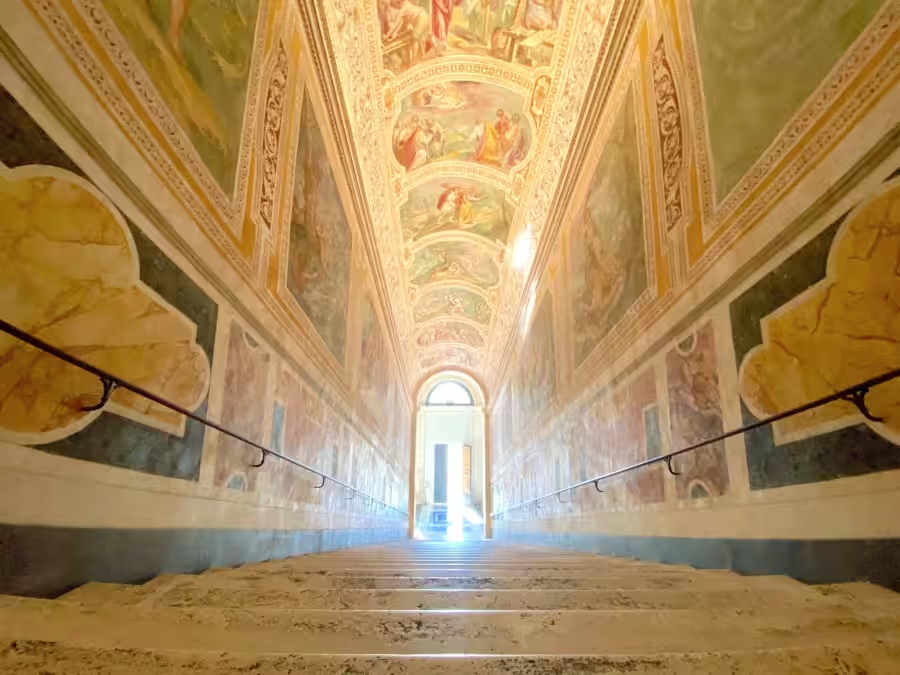
The twenty-eight marble steps of the Scala Santa are believed to have come from the praetorium of Pontius Pilate in Jerusalem, where Christ was condemned before the Crucifixion. According to tradition, they were brought to Rome in the 4th century by Helena, mother of Emperor Constantine.
Centuries of devotion wore the marble down, so the steps were covered in wood in the 18th century. Small slots still reveal the stone beneath, and circular windows mark the spots where Christ’s blood was believed to have fallen.
At the top of the staircase is the Sancta Sanctorum - the “Holy of Holies”. Long before the Vatican became the centre of papal power, this was the private chapel of the popes, part of the old Lateran complex and one of the most restricted sacred spaces in medieval Rome.
What you see today mostly dates to the late 13th century, when Pope Nicholas III restored the chapel after earthquake damage and filled it with frescoes. For centuries, much of that medieval decoration was hidden beneath later layers of paint added in the 17th century. Only in recent decades, thanks to restoration work begun in the 1990s, have the original frescoes come back into view.
Step inside and the walls pull you close. Saints, martyrs, gestures, faces, deep blues, strong reds, flashes of gold - the chapel is small, but the colour makes it feel immersive.
A cycle of saints runs around the room: the crucifixion of Saint Peter, the beheading of Saint Paul, the stoning of Saint Stephen, the martyrdom of Saint Lawrence, and others whose stories shaped early Christian memory.
Look closely and you can even see the restoration history written on the wall. In the stoning of Saint Stephen, one side remains darker from later repainting, while the recovered 13th-century surface suddenly glows again. It’s like watching the Middle Ages reappear in real time.
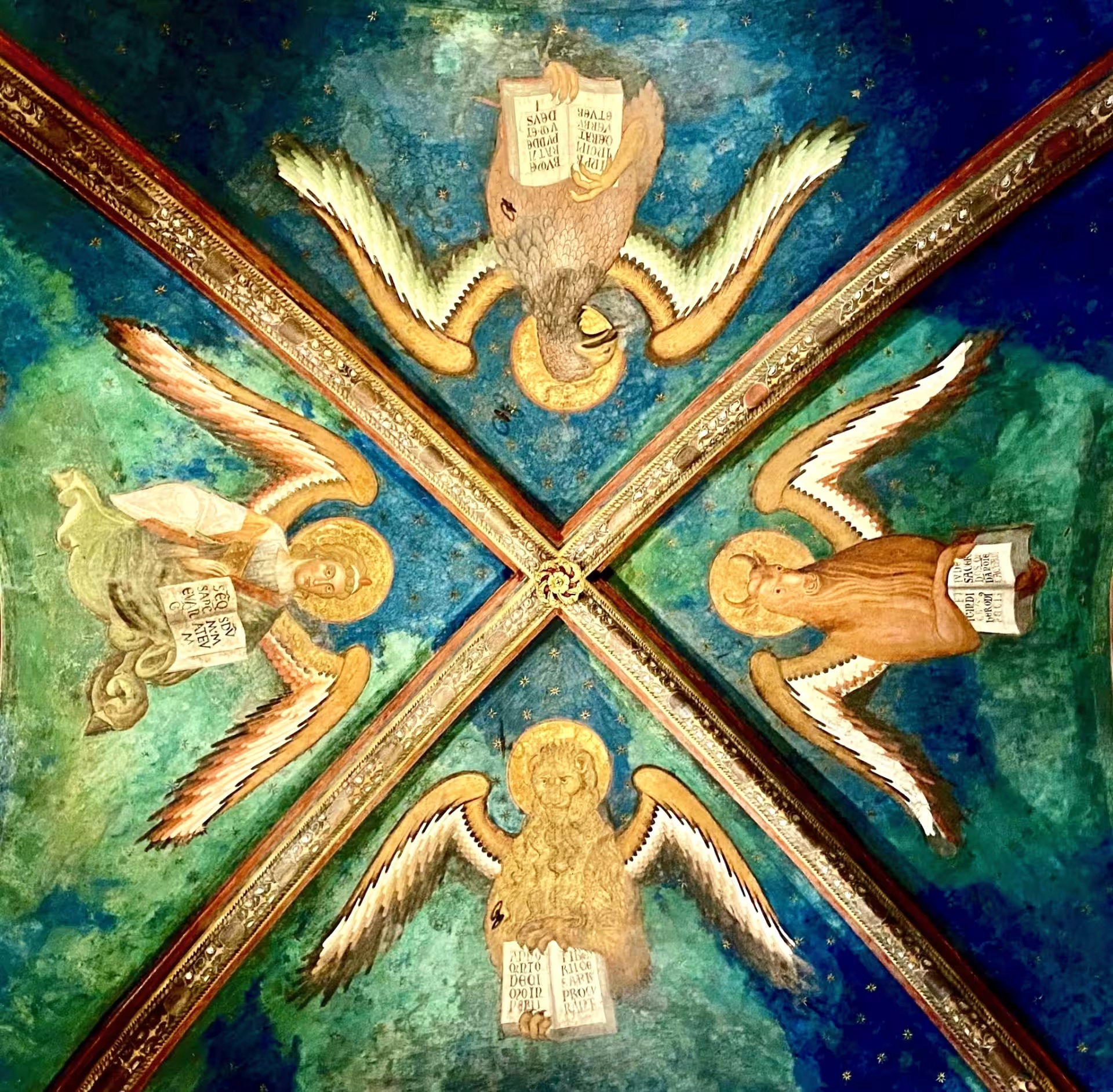
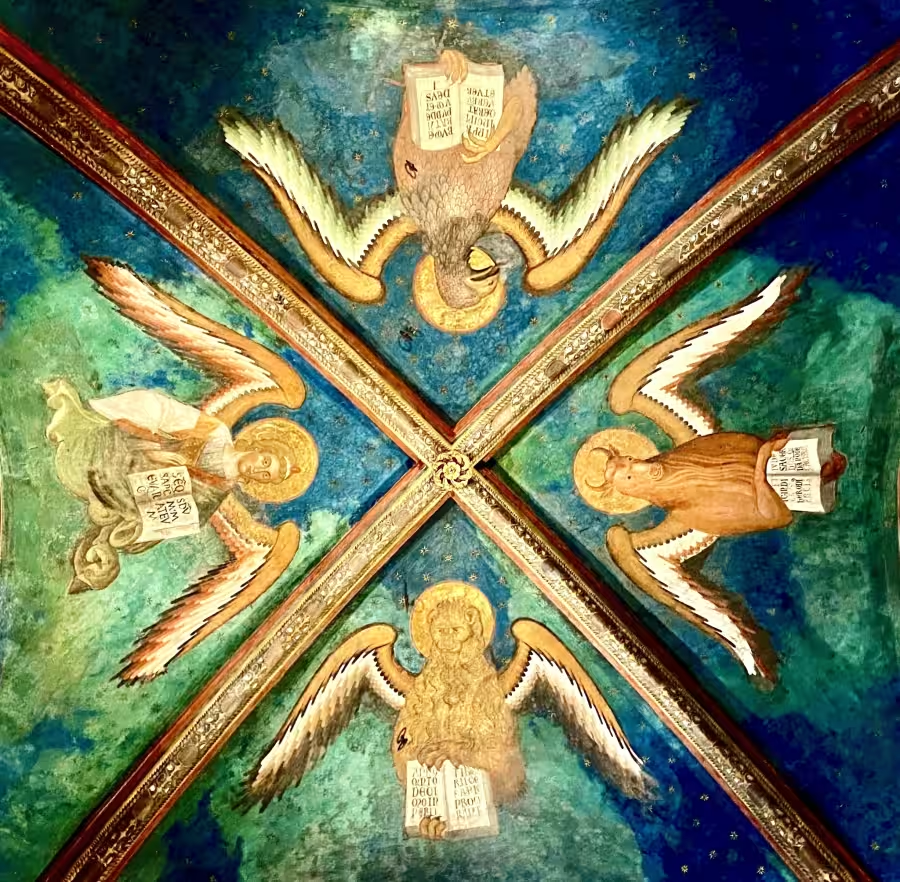
Above, the vault ties the room together. Against a deep blue-green background, the four evangelists appear through their symbols - angel, lion, ox, and eagle - anchoring the ceiling.
The name Sancta Sanctorum means “Holy of Holies,” and it comes from what the chapel once protected. This was one of medieval Rome’s most important relic chapels - not a museum of sacred objects, but a locked treasury of presence and power.
Behind the altar is the Acheropita, an ancient icon of Christ said to be “not made by human hands.” Tradition claimed it was begun by Saint Luke and completed by angels. Most of the image is now covered by a medieval silver-gilt casing, but the face remains visible - still, frontal, and impossible not to look at.
Beneath the altar lies the sealed relic chest, locked behind bronze and ironwork. You don’t see what’s inside - and that’s part of the charge. This was never meant to be a museum display, but a sacred treasury: hidden, protected, and venerated.
If you’re visiting San Giovanni in Laterano or exploring this part of Rome, the Scala Santa is impossible to miss. The climb itself is powerful, but the chapel above it adds another layer: relics, frescoes, papal history, and one of Rome’s most sacred hidden spaces.
Want to explore more of Rome’s relics and sacred sites? Our Underground temples & crucifixion relics walking tour includes the Scala Santa, San Giovanni in Laterano, San Clemente, and more.