Touriks Team
Posted on Jun 25, 2025 5 min read

Posted on Jun 25, 2025 5 min read
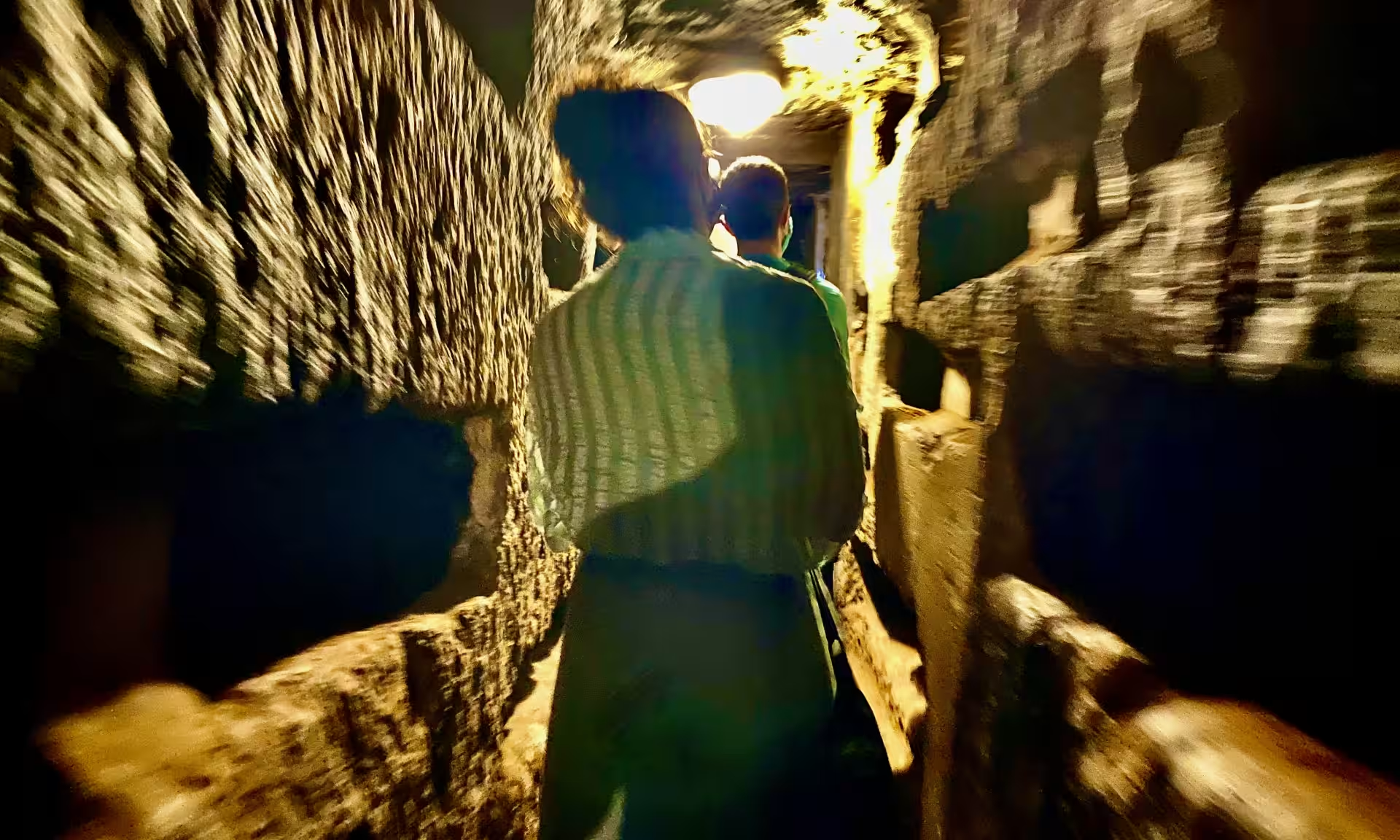
Rome dazzles above ground: domes, fountains, marble everywhere. But beneath the city? A whole other Rome waits: quieter, darker, and carved straight into the earth.
We’re talking catacombs: miles of underground tunnels where early Christians buried their dead, whispered prayers, and left behind some of the city’s oldest sacred art. Spooky? A little. Fascinating? Absolutely.
There are dozens of catacombs around Rome, but only a handful are open to the public. These five are the most famous, the easiest to explore, and the most rewarding: San Callisto, San Sebastiano, Domitilla, Priscilla, and Sant’Agnese.
Each one has its own personality, stories, and underground energy, and since visits are guided only, you’ll want to choose the one that sparks your curiosity the most. Times listed below match the official tours, so you know roughly what to expect.
Ready to go underground? Let’s descend.
(Psst: Already hooked on Rome’s hidden layers? Don’t miss our guide to Rome’s Underground Hidden Gems - filled with crypts, tunnels, and buried worlds beneath the streets).
1. Catacombs of San Callisto
2. Catacombs of San Sebastiano
3. Catacombs of Domitilla
4. Catacombs of Priscilla
5. Catacombs of Sant’Agnese
For: First-timers, big-history lovers, and anyone who wants the “classic” catacombs experience.
If it’s your first time underground, start here. San Callisto is the heavyweight: one of Rome’s largest and most famous catacombs, stretching for kilometres beneath the Appian Way and once holding the remains of around half a million Christians.
This is where you get the full picture: long corridors, burial niches, and early Christian symbols carved into the walls: anchors, fish, and the Christ monogram quietly repeating through the darkness. The highlight? The Crypt of the Popes, often called the “Little Vatican”, where several early popes were laid to rest.
If you want scale, significance, and a strong introduction to Rome’s underground world, this is the one.
Time needed: 45 minutes.
Tip: Go early to dodge the biggest groups.
Vibe: Grand, historic, and slightly bustling - but a true classic.
For: Pilgrims, relic hunters, and those craving a slightly quieter vibe than San Callisto.
Just a short walk from San Callisto, San Sebastiano feels smaller - but don’t be fooled. Tradition says the remains of Saints Peter and Paul were once hidden here, making this a powerful pilgrimage site in early Christian Rome.
The tunnels are narrower than Callisto’s, but the drama hits just as hard: persecution, secret burials, and early Christian rituals that come alive underground.
Bonus? The basilica above is a treasure trove: it holds the famous “Quo Vadis?” stone, a relic chapel, and even a striking Bernini bust. History above, sacred stories below - this one hits both.
Time needed: 45 minutes (add extra if you linger in the basilica).
Tip: Pair it with a stroll or bike ride along the Appian Way - ancient road, aqueducts, and countryside calm.
Vibe: Sacred, narrative-rich, and quietly moving.
For: History lovers, archaeology fans, and anyone curious about everyday life in early Christian Rome.
Domitilla is vast, winding, and surprisingly immersive. The tunnels stretch on and on, and what sets them apart is what’s on the walls.
Here, the frescoes don’t just show saints and symbols. They show daily life: grapevines, bakers at work, communal meals, all tiny snapshots of everyday life, remarkably preserved underground for centuries.
The crown jewel? A semi-underground basilica carved straight into the rock - a one-of-a-kind space in Rome. Walking here feels less like touring and more like discovering a hidden city.
Don’t want to think about how to get there? Join our guided tour of the Catacombs of Domitilla with transfer from the city centre included - no fuss, just underground wonder.
Time needed: About 45 minutes.
Tip: Ideal if you’re into early art, archaeology, or exploring hidden underground surprises.
Vibe: Immersive, mysterious, quietly magical.

For: Art-history lovers, symbolism nerds, and early-Christian-art obsessives.
Small but mighty, Priscilla is also known as the “Queen of the Catacombs”, and it earns the title.
This is where some of the oldest Christian imagery in the world survives, including what’s believed to be the earliest known image of the Virgin Mary. You’ll also spot the Good Shepherd, scenes of salvation, and the extraordinary fresco of the Veiled Woman in prayer.
Priscilla doesn’t impress with size. It wows with artistic richness, punching well above its weight in early Christian treasures.
Time needed: Around 45 minutes.
Tip: Scan walls and ceilings - some of the best details hide above eye level.
Vibe: Symbolic, intimate, pure art-history gold.
For: Repeat visitors, quiet seekers, and anyone drawn to saints’ stories and devotion.
Built around the tomb of Saint Agnes, this one feels deeply personal. Smaller and more restrained than the others, this one is less about spectacle and more about quiet reflection.
And the above-ground magic? It’s even better. The Basilica of Sant’Agnese and the Mausoleum of Santa Costanza are bursting with vibrant 4th-century mosaics that fuse classical Roman art with early Christian storytelling. Colour, light, and history collide in every corner.
If you want a softer, more contemplative underground experience, this one will stick with you.
Time needed: 30 minutes (closer to an hour if you add the basilica and mausoleum)
Tip: Don’t skip Santa Costanza - its one of Rome’s most underrated gems.
Vibe: Spiritual, serene, and awe-inspiring.
Still undecided? Here’s your lightning round:
> First time underground? San Callisto
> Legends, relics, and Appian Way vibes? San Sebastiano
> Quiet, immersive, and with an underground basilica? Domitilla
> Early Christian art and symbolism? Priscilla
> Quiet devotion and beautiful mosaics above ground? Sant’Agnese
You don’t need to hit them all - just pick the one that sparks your curiosity, not the one with the biggest name.
Want to keep digging? Pair your visit with crypts, tunnels, and buried sanctuaries in our guide to Rome’s Underground Hidden Gems.