Touriks Team
Posted on Jun 25, 2025 4 min read

Posted on Jun 25, 2025 4 min read
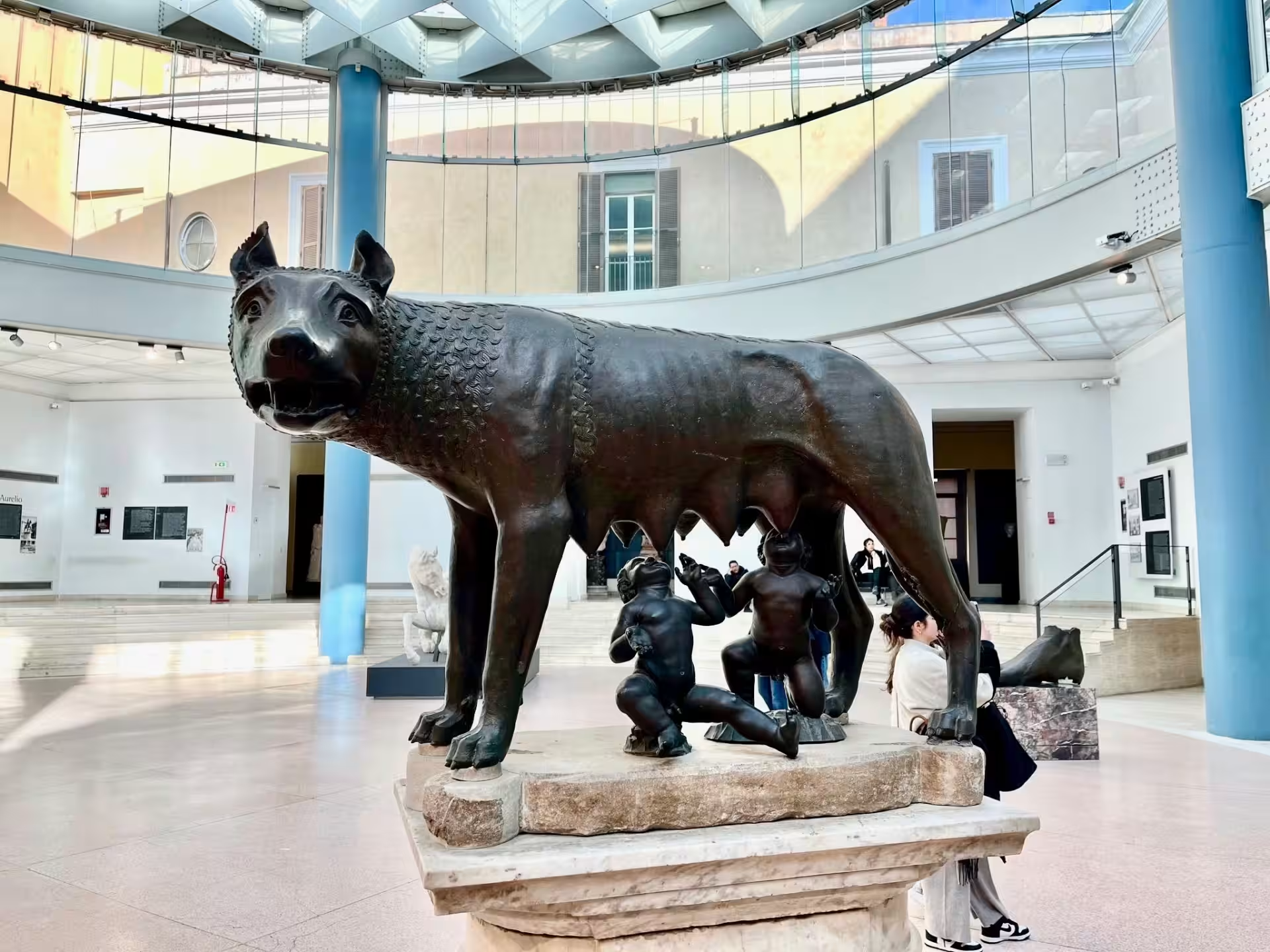
Few images are as closely tied to Rome as the she-wolf. Ears alert, body tense, head turned slightly to the side, and beneath her two small figures reaching upward, feeding at her belly. It’s an image that appears everywhere: on civic emblems, coins, souvenirs, and city seals.
But behind this familiar symbol lies a story that blends myth, politics, archaeology, and identity - and one sculpture that has come to embody the very idea of Rome itself.
Today, the Capitoline She-Wolf is housed in the Capitoline Museums, overlooking the Roman Forum from the hill that has always stood at the heart of the city’s civic life. To stand before it is not just to see a famous artwork, but to encounter Rome’s origin story made visible in bronze.
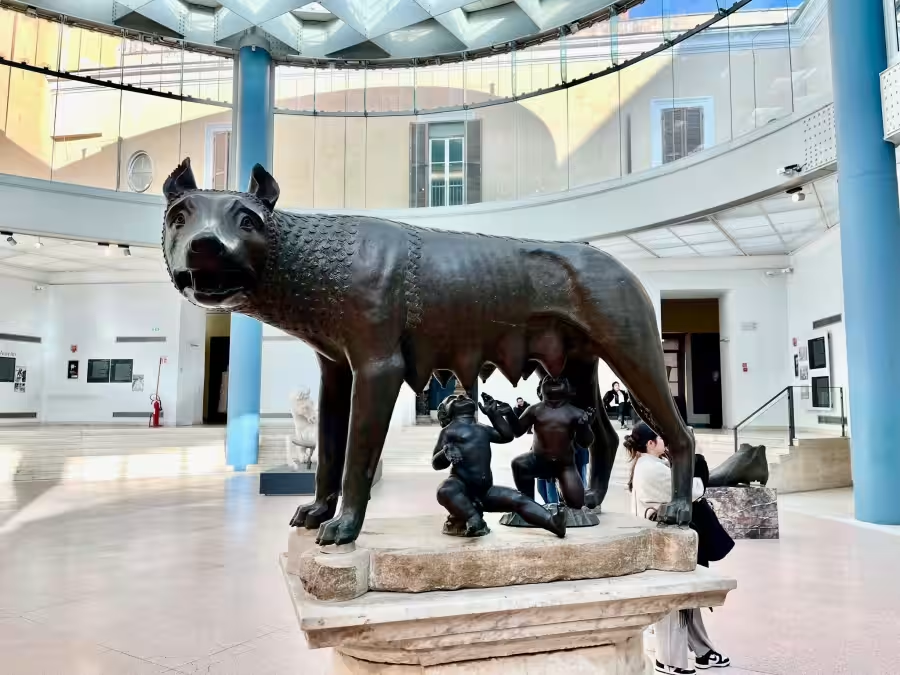
According to legend, Rome was founded in 753 BC by Romulus and Remus, twin brothers born to the Vestal Virgin Rhea Silvia and the god Mars. Cast into the Tiber as infants, they survived and were carried by the river, left at the foot of the Palatine Hill, and discovered by a she-wolf who nursed them in her den. As adults, the brothers would go on to found a city, yet then turned against one another. Romulus killed Remus, claimed sole power and gave Rome its name.
The story is myth, but its power lies in what it expresses. Rome does not begin in safety or harmony, but in danger, exposure, and survival. The she-wolf is not gentle or sentimental in the conventional sense. She is wild, vigilant, and strong - a creature of instinct rather than comfort. From her, Rome inherits resilience.
Even the legend’s darker turn - Romulus killing Remus - reinforces the same idea: Rome’s greatness would come at a cost. Conflict, ambition, and power are present from the very beginning.
The bronze she-wolf herself is one of the most debated sculptures in Rome. Long believed to be an Etruscan work from the 5th century BC, scholarship in recent decades has complicated that certainty. Some studies now suggest the wolf may instead date to the medieval period, possibly cast in the 11th or 12th century, while the twins beneath her were added later, during the Renaissance.
Regardless of its precise date, the sculpture has functioned as a symbol of Rome for centuries. By the Middle Ages, the she-wolf was already understood as an emblem of the city. By the Renaissance, she had become inseparable from Rome’s identity - political, cultural, and historical.
Many ancient myths faded as religions changed and empires fell. Rome’s founding myth did not. Instead, it was absorbed, reused, and reinterpreted across centuries.
The she-wolf endures because she operates on multiple levels at once. She is myth, political symbol, artistic object, and historical question mark. Claimed and reimagined by emperors, popes, humanists, and the modern city alike, she has remained endlessly relevant without ever losing her core meaning.
In a place defined by layers, continuity matters. The she-wolf became a visual anchor, a way of saying: this city remembers where it came from.
There is no more fitting home for the Capitoline She-Wolf than the Capitoline Museums. Often described as the world’s oldest public museums, they are deeply intertwined with Rome’s civic identity. Here, the city has long displayed the objects through which it tells its own story.

Founded in the 15th century when Pope Sixtus IV donated ancient bronzes to the people of Rome, the Capitoline Museums were conceived as a public inheritance. Here, sculptures, inscriptions, reliefs, and portraits are not arranged to tell a universal story of art, but a specifically Roman one.
Seen in this context, the she-wolf is not an isolated masterpiece. She is part of a broader narrative about memory, power, and the city’s art and identity across more than two millennia.
Encountering the Capitoline She-Wolf in person is a quieter experience than her fame suggests. There is no theatrical setting, no dramatic spotlight. She stands calmly, self-contained and watchful.
The Capitoline She-Wolf endures because she captures something essential: Rome as a city born of myth, defined by resilience and continuity, embodying the strength, vigilance, and the enduring spirit that have long characterised the city.
To see her in the Capitoline Museums is not just to encounter a symbol, but to understand how Rome has remembered itself, again and again, for more than two thousand years.
Want to see the She-Wolf for yourself? Explore the Capitoline Museums with us and discover the stories behind the collection.