Touriks Team
Posted on Jun 25, 2025 2 min read

Posted on Jun 25, 2025 2 min read
Step into Basilica di Santo Stefano Rotondo and the space feels almost disarming. No long nave, no gilded apse, no theatrical crescendo. Instead, a perfect circle unfolds around you - columns marching in quiet rhythm, light filtering softly from above. But look closer, and the walls erupt with stories that are anything but quiet.
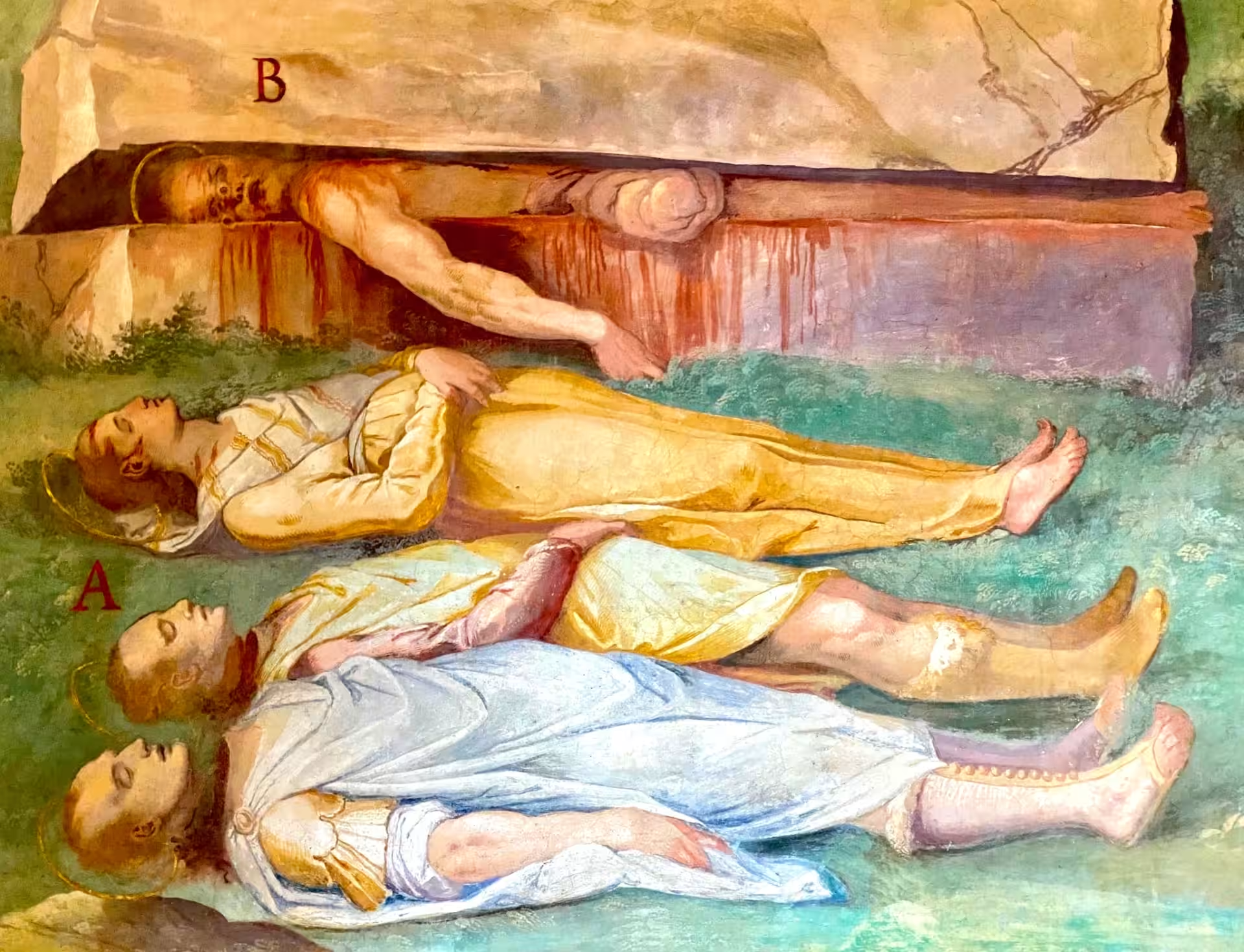
Along the outer ring runs a cycle of thirty-four frescoes that confronts you with one of the most intense painted narratives in Rome: scenes of martyrdom rendered with unflinching clarity.
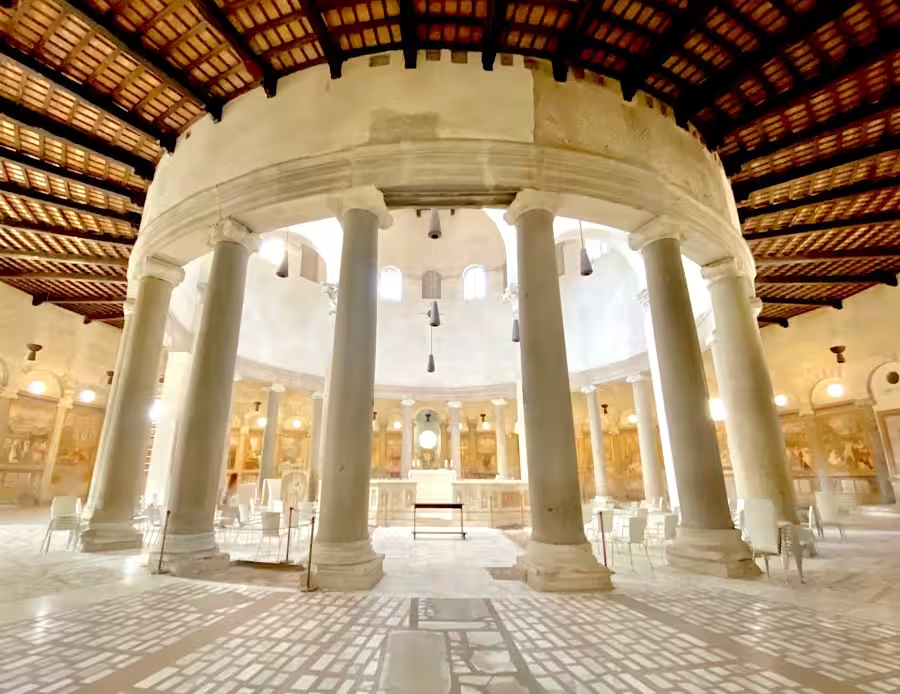
Santo Stefano Rotondo was built in the mid-5th century, when Christianity was still shaping its architectural language. Its circular plan likely recalls early martyria - buildings constructed over the tombs of martyrs - making this a space inherently tied to sacrifice, remembrance, and faith.
That context matters. Because the frescoes you see today, added more than thousand years later in the late 16th century, were never intended as decoration. They were meant to instruct, to warn, and to fortify - lessons painted directly onto the walls.
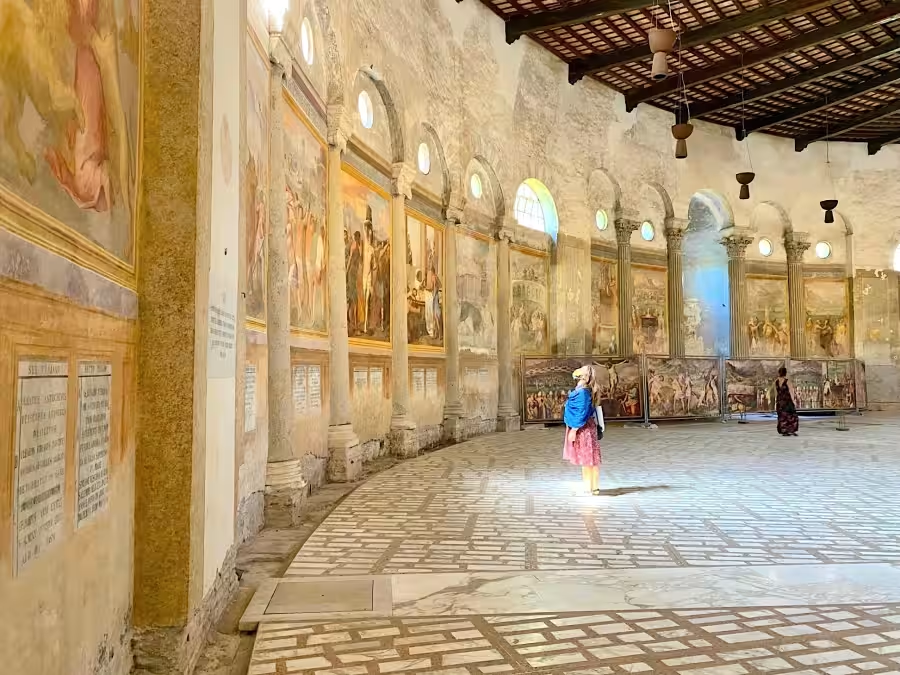
Painted around 1582 under Pope Gregory XIII, the frescoes depict the deaths of Christian martyrs with startling directness. Saints are burned, flayed, stoned, dismembered, pierced by hooks and blades. Roman executioners carry out their work methodically, onlookers watch, the martyrs endure.
Each scene is accompanied by an inscription in Latin and Italian identifying the martyr and the manner of death. The walls turn into a grim catalogue of suffering and steadfastness - a visual litany encircling the church.
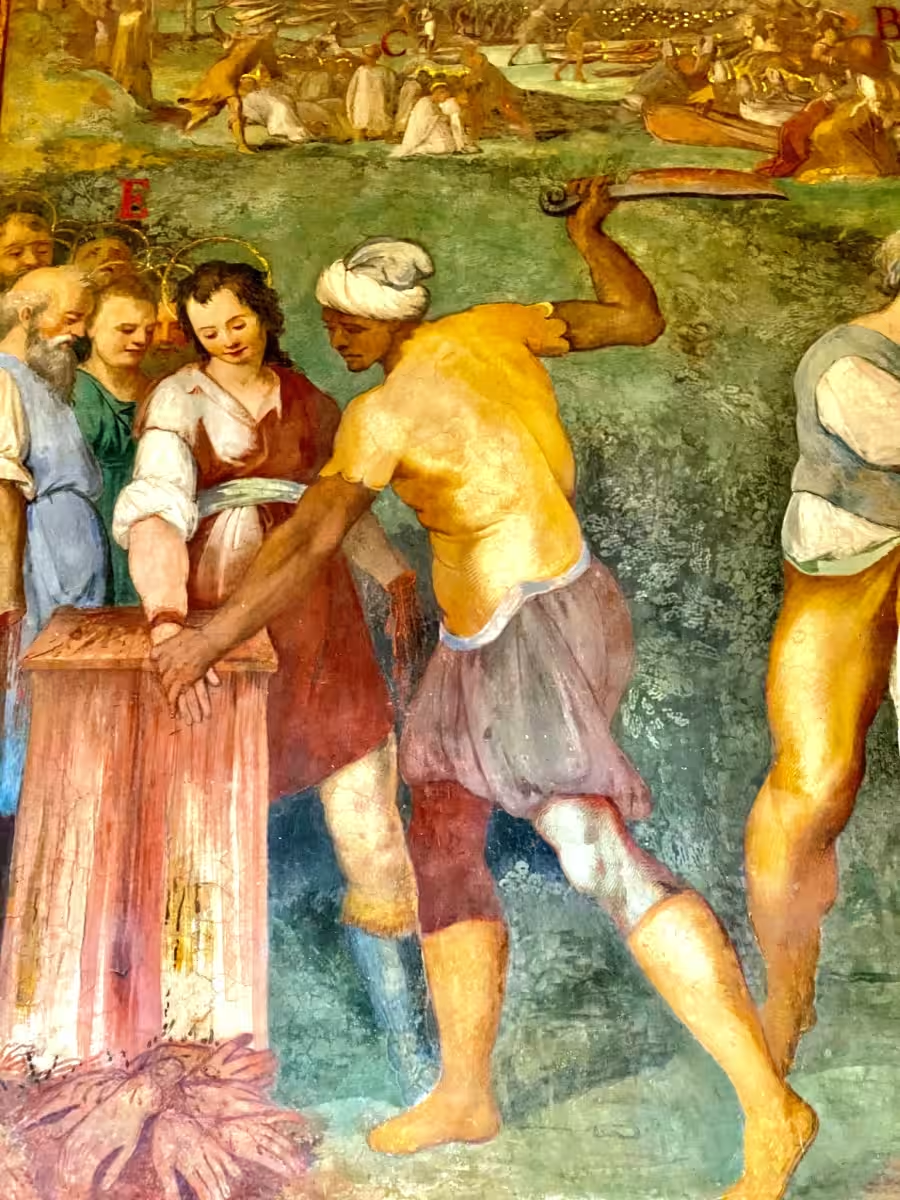
The intensity of the frescoes reflects the moment in which they were created. The late 16th century was the age of the Counter-Reformation, when the Catholic Church reaffirmed discipline, doctrine, and commitment in response to profound internal and external challenges.
The frescoes weren't meant to horrify for horror's sake. Santo Stefano Rotondo was entrusted to the Jesuits and used as a teaching church, especially for young missionaries preparing to face persecution abroad. These images served as lessons in perseverance: stark visual reminders of what unwavering faith could demand.
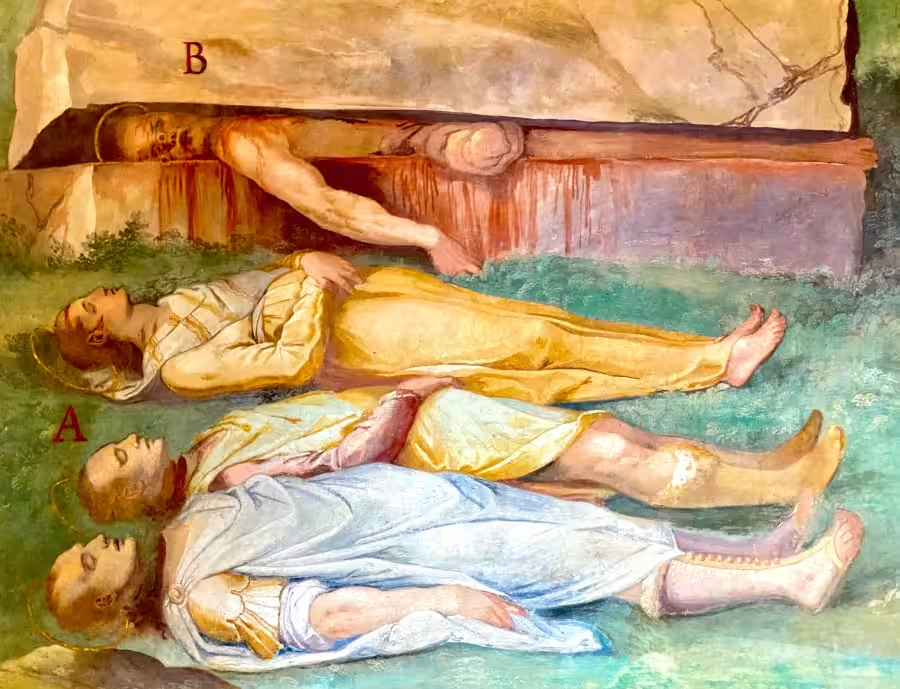
Santo Stefano Rotondo is not a gallery for the faint-hearted. It's a journey through faith, fear, sacrifice, and resilience.
What makes these frescoes unforgettable is the contrast they create with their setting. The architecture remains calm, measured, almost abstract. The spaces invites contemplation, while the walls refuse to let contemplation remain comfortable.
It is this tension that gives Santo Stefano Rotondo its power. The church doesn't overwhelm with grandeur; it unsettles with meaning. Faith here is not triumphant or ornamental. It is tested, embodied, and fixed in pigment and plaster.
Want to see the frescoes for yourself? Join our guided tour and discover Santo Stefano Rotondo up close.